
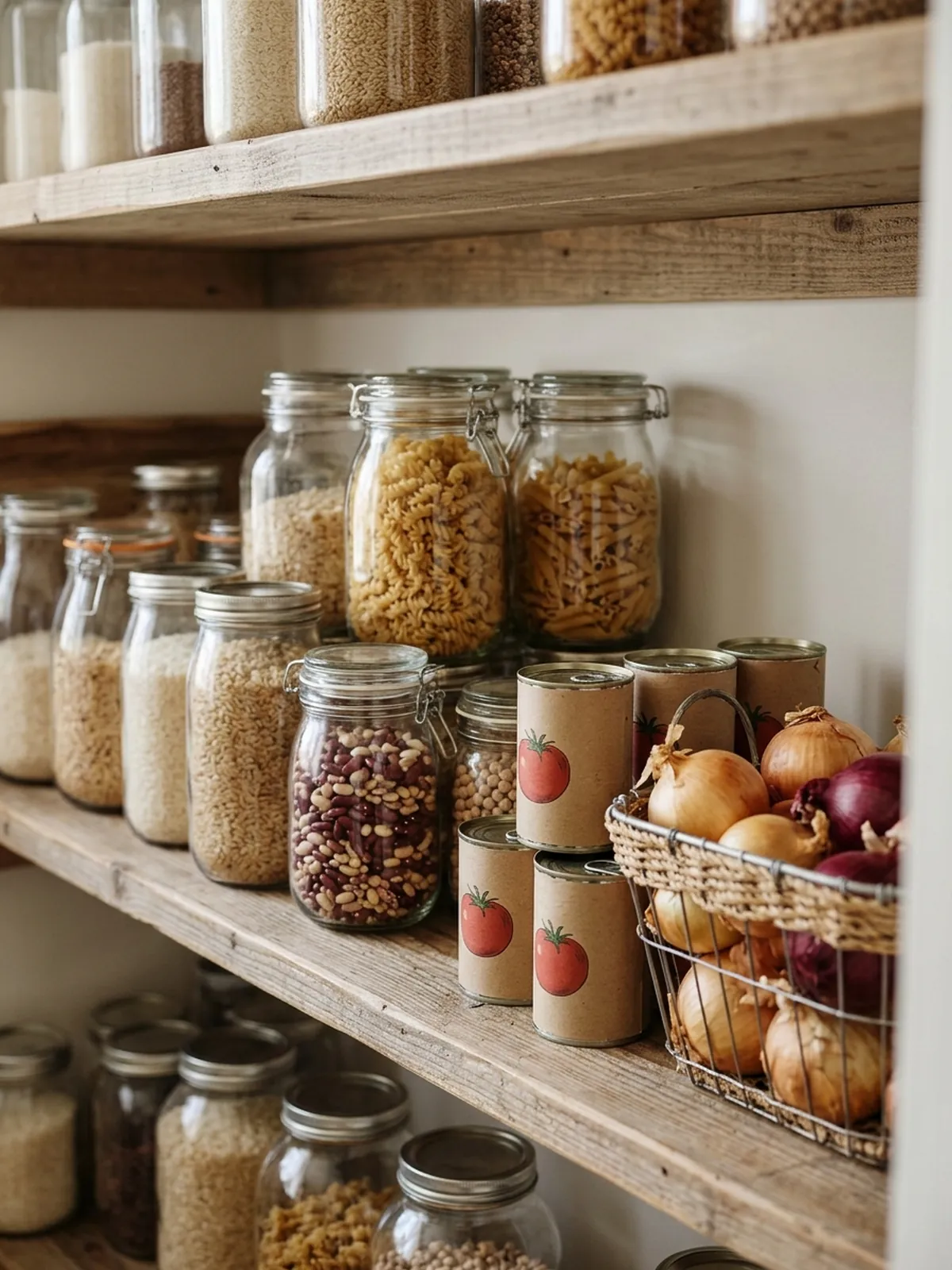
A pantry challenge means eating mostly from the food you already have in your pantry, fridge and freezer for a set time, usually one to four weeks, and buying only fresh basics like milk, eggs and produce. It cuts your grocery bill, clears out forgotten food and teaches you to cook creatively with what is on hand.
Run a pantry challenge in 7 steps: take inventory, plan meals from what you have, buy only fresh basics and save $100 to $300, with a printable sheet.
Most families have more food at home than they realize, and learning to eat from your pantry is one of the easiest ways to save. A two-week pantry challenge often saves $100 to $300, depending on how full your shelves are and how much you normally spend.
Below are seven steps, a sample meal plan built from common staples, rules for what to buy, ideas for using up odd ingredients and a printable inventory sheet.
Savings depend on your household and normal spending, so treat the numbers as rough guides.
Table of Contents 27 sections
Pantry Challenge at a Glance
Simple rules many families use. Adjust them to your household.
| Rule | Example |
|---|---|
| Length | One to four weeks |
| Weekly fresh budget | $30 to $60 for a family of four |
| Allowed purchases | Milk, eggs, bread, fresh fruit and vegetables |
| Not allowed | New pantry staples, snacks, takeout |
| Where savings go | Savings account, debt or a goal |
Step 1: Set Your Rules and Length
Decide how long your pantry challenge will last and what you are allowed to buy. Two weeks is a good first challenge: long enough to save real money, short enough to stay motivated.

Set a small weekly budget for fresh items like milk, eggs, bread and produce. Write it down so everyone in the household knows the plan.
Step 2: Take a Full Inventory
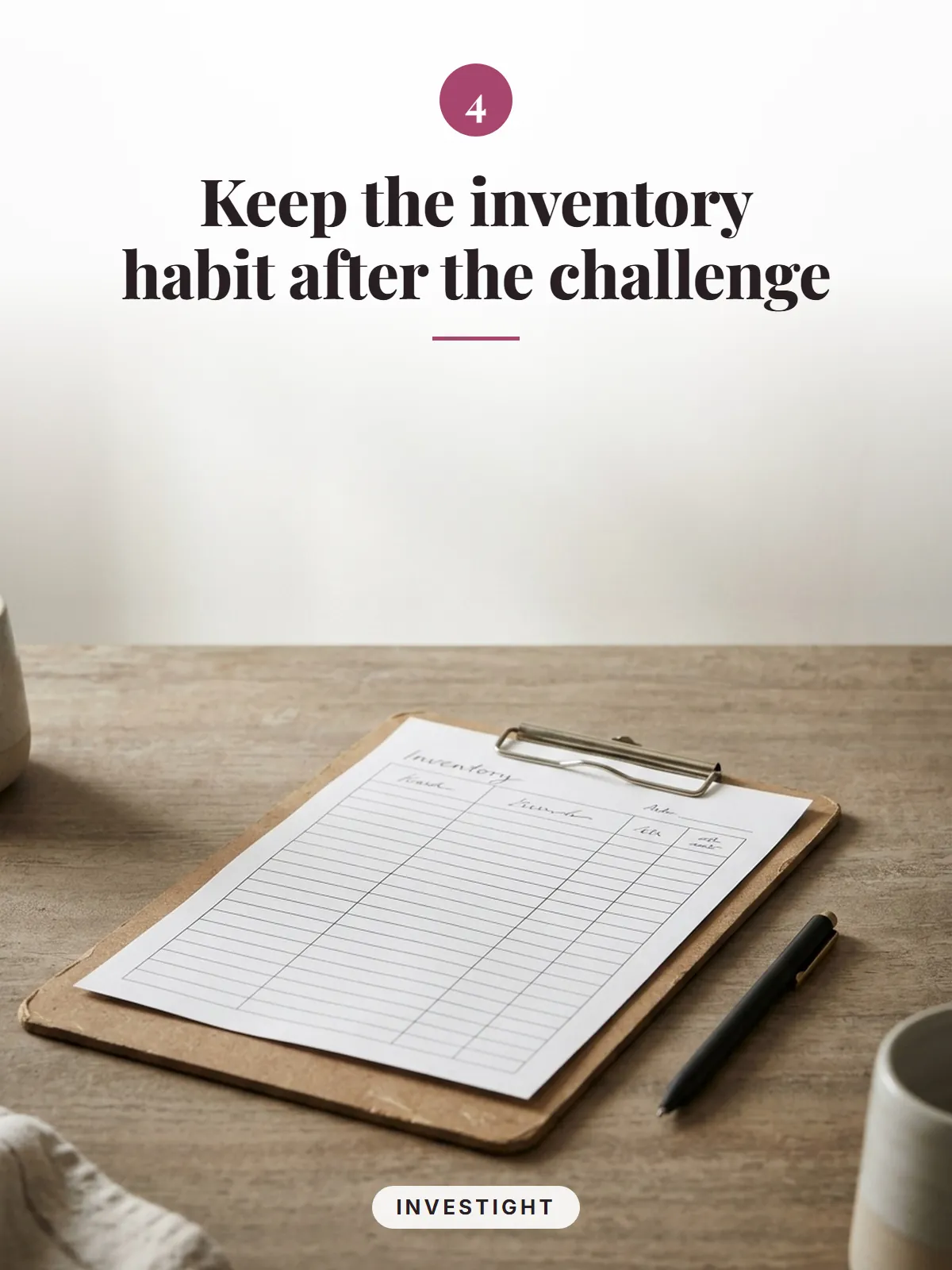
Go through the pantry, fridge and freezer and write down everything you have. Group items by type: grains and pasta, canned goods, proteins, frozen vegetables, sauces and baking supplies.
This is often the most eye-opening step. Many people find duplicate items, forgotten freezer meals and staples they bought months ago.
Step 3: Use What Will Expire First
Look at expiration dates and the fridge first. Fresh produce, dairy and leftovers need to be used in the first few days. Pantry staples and frozen food can wait.
Step 4: Build Meals From Your Inventory
Look for combinations: pasta plus canned tomatoes plus frozen vegetables becomes pasta primavera. Rice plus beans plus spices becomes a burrito bowl. Eggs plus anything becomes a frittata.
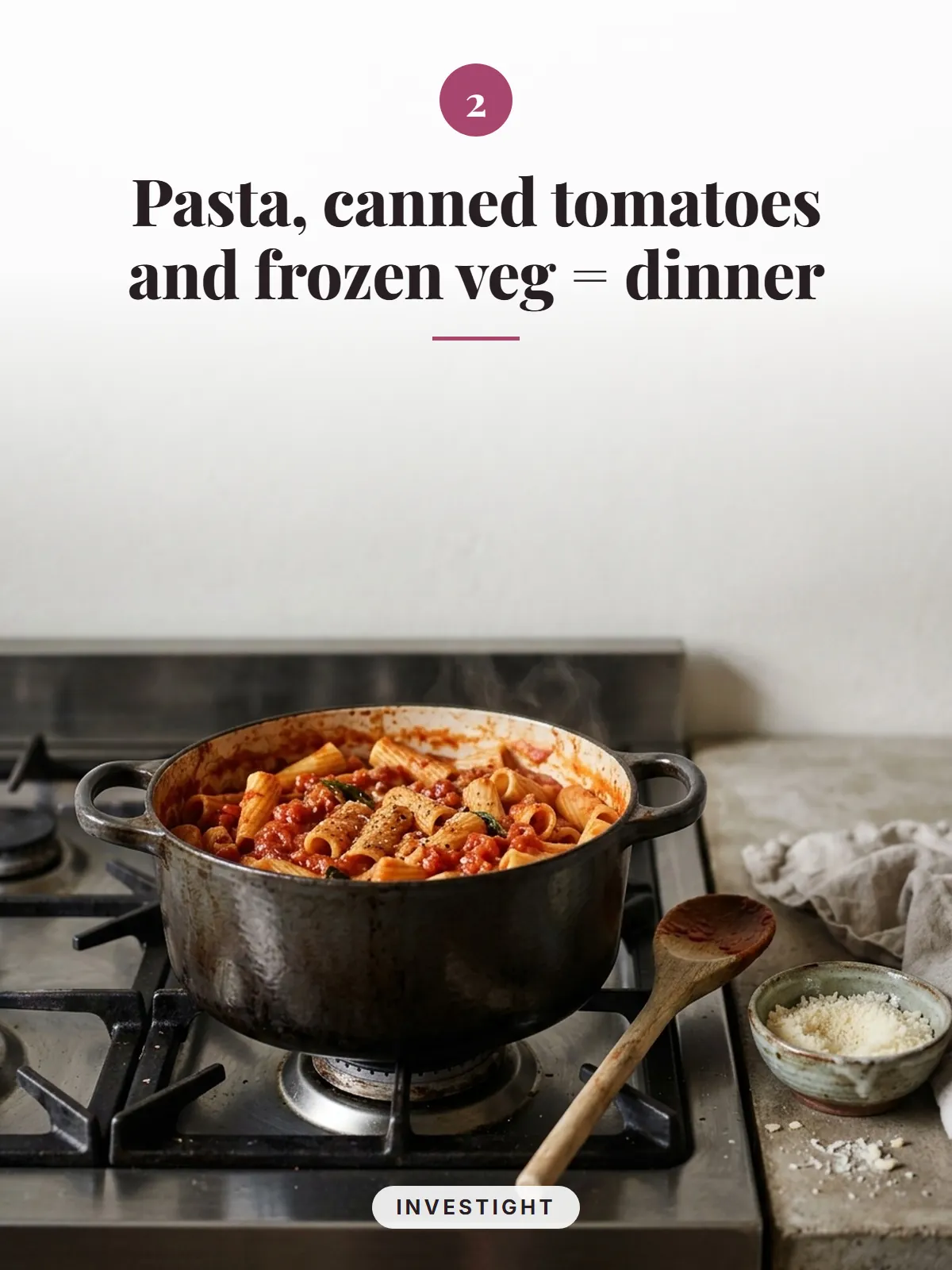
Plan dinners for the first week, then see what is left for week two. Keep a list of "missing pieces," like an onion or a lemon, to buy with your fresh budget.
Step 5: Buy Only Fresh Basics
Shop once a week with your fresh budget and a list. Stick to items that complete meals you already planned. Skip the snack aisle and new pantry items.
Step 6: Get Creative With Odd Ingredients
Every pantry has a few odd items: a jar of olives, a bag of quinoa, a can of coconut milk. Search for recipes using two or three of them together, or turn them into soups, curries and casseroles.
Step 7: Move the Savings
At the end of each week, compare what you spent with your usual grocery bill and move the difference into savings or a debt payment. Seeing the money land in your account is the best reward.

A Sample Two-Week Pantry Challenge Meal Plan
Here is a sample plan built from common pantry and freezer staples. Swap meals based on what you actually have.
| Day | Dinner | Mostly From |
|---|---|---|
| 1 | Pasta with canned tomatoes and frozen vegetables | Pantry and freezer |
| 2 | Rice and bean burrito bowls | Pantry |
| 3 | Egg fried rice with leftover rice | Fridge and freezer |
| 4 | Lentil soup with bread | Pantry |
| 5 | Breakfast for dinner: pancakes and eggs | Pantry and fridge |
| 6 | Freezer chicken with roasted potatoes | Freezer and pantry |
| 7 | Leftovers night | Fridge |
| 8 | Chili with canned beans and tomatoes | Pantry |
| 9 | Baked potatoes with leftover chili | Pantry and fridge |
| 10 | Tuna pasta | Pantry |
| 11 | Frittata with odds and ends | Fridge |
| 12 | Homemade pizza with flatbread or dough | Pantry and freezer |
| 13 | Curry with canned chickpeas and coconut milk | Pantry |
| 14 | Clean-out-the-fridge soup | Fridge and pantry |
Breakfasts can come from oats, eggs and pancakes, and lunches from leftovers and sandwiches.
Pantry Challenge Meal Ideas From Basic Staples
With rice: fried rice, burrito bowls, rice and beans, soup with rice, rice pudding. With pasta: tomato pasta, tuna pasta, pasta soup, baked pasta with whatever cheese you have.
With beans and lentils: chili, soups, curries, bean tacos, hummus. With eggs: frittatas, egg fried rice, breakfast sandwiches, egg salad. With potatoes: baked potato bars, potato soup, hash, oven fries.
With flour and baking supplies: pancakes, flatbread, biscuits, pizza dough, muffins. These stretch the challenge and make it feel like a treat.
Use Up the Freezer
Freezers often hold the biggest forgotten value: meat bought on sale, bags of vegetables and leftover meals. Write a freezer inventory and plan at least three meals a week around it.
Label anything without a date, and use the oldest items first. A freezer clean-out also makes room for future batch cooking and sale purchases.
How Much Can a Pantry Challenge Save?
If a family of four usually spends $250 a week on groceries and spends $50 a week on fresh items during the challenge, a two-week challenge saves about $400. Even a partial challenge, cutting the bill to $150 a week, saves $200.
The actual savings depend on how stocked your pantry is and how strict your rules are. The bigger win is often long-term: after a pantry challenge, most people buy less and waste less.
Pantry Challenge With Kids
Involve kids in planning. Let them pick a "mystery ingredient" from the pantry and help find a recipe for it. Turn it into a family game, like a cooking show at home.
Keep a few familiar favorites in the plan, like pancakes or pasta, so kids do not feel like everything has changed. Celebrate the end with a small treat paid for from the savings.
How to Eat From Your Pantry Without Getting Bored
The secret to a fun pantry challenge is variety in flavor, not ingredients. A few spices and sauces can turn the same rice and beans into Mexican, Indian or Cajun meals on different nights.
Try theme nights: soup Monday, taco Tuesday, pasta Wednesday, breakfast-for-dinner Thursday and pizza Friday. Themes make planning faster and give the week a rhythm everyone looks forward to.
Bake something simple, like muffins, bread or cookies, from pantry baking supplies. Fresh-baked treats make the challenge feel generous instead of restrictive.
Breakfast and Lunch Ideas for a Pantry Challenge
Breakfast: oatmeal with cinnamon or frozen fruit, pancakes, scrambled eggs, toast with peanut butter and homemade granola from oats and honey.
Lunch: leftovers from dinner, bean and cheese quesadillas, egg salad sandwiches, pasta salad, soup and grilled cheese or rice bowls with whatever vegetables are on hand.
Planning breakfast and lunch matters, because these are often where small grocery trips and convenience purchases sneak back in.
Strict vs Flexible Pantry Challenge Rules
A strict pantry challenge allows almost no purchases, maybe only milk and eggs. It saves the most but works best with a very full pantry and freezer.
A flexible challenge allows a small weekly budget for fresh produce, dairy and one or two missing ingredients. It is easier to stick with and better for families with young kids.
Choose the version that fits your household. A flexible challenge you finish saves more than a strict one you abandon after four days.
A Pantry Challenge and Your Grocery Budget
A pantry challenge is a reset for your grocery budget. Before you start, write down what you normally spend in a week. During the challenge, track every fresh purchase. Afterward, compare.
Many people find that after a challenge, they can lower their regular grocery budget permanently, because they now know what they actually use and what tends to go to waste.
The Pantry Challenge and Food Waste
Food waste is one of the biggest hidden grocery costs. Forgotten leftovers, spoiled produce and expired cans are money in the trash.
A pantry challenge forces you to use what you have, which cuts waste right away. Keeping your inventory updated afterward, and doing a short challenge once a month, keeps waste low for good.
This kind of everyday frugality is less about giving things up and more about valuing what you already bought.
How to Restock Smartly After the Challenge
When the challenge ends, resist the urge to refill every shelf at once. Restock only the staples you used most and buy them on sale when you can.
Keep a short list of core staples, like rice, pasta, beans, canned tomatoes, oats, flour and frozen vegetables, and buy them when prices are low. A smaller, well-used pantry saves more than an overflowing one.
Pantry Challenge for One or Two People
Smaller households can do a pantry challenge too. Cook full recipes and freeze portions, so you get variety without eating the same dish all week.
Focus on using fresh items before they spoil, and plan one or two clean-out meals each week, like a frittata or a soup, to use small leftovers.
Make It a Monthly Habit
You do not need a dramatic challenge every time. Many families do a "pantry week" once a month: one week of eating mostly from what they have, with only fresh basics on the list.
A monthly pantry week keeps shelves from overflowing, uses food before it expires and steadily lowers the average grocery bill. Over a year, twelve pantry weeks can save as much as a few months of normal grocery spending for some households.
Put the pantry week on the calendar, like the last week of each month, so it becomes a routine rather than a special event.
Simple Substitutions When You Are Missing Something
No fresh onion? Use onion powder. No breadcrumbs? Crush crackers or toast bread. No buttermilk? Add a spoon of vinegar or lemon juice to milk and wait a few minutes.
No fresh herbs? Use dried ones at about a third of the amount. No pasta sauce? Use canned tomatoes with garlic, salt and dried herbs. Small swaps like these keep the challenge going without a trip to the store.
Pantry Challenge for Emergencies
A pantry challenge is also a smart move in a tight month, like after a job loss or a big unexpected bill. Eating from the pantry frees grocery money for urgent costs.
It is a good reason to keep a modest stock of shelf-stable staples at all times. A well-planned pantry is like a small emergency fund in food form.
Organize Your Pantry So Nothing Gets Lost
After the challenge, a simple layout keeps food visible. Put older items in front and newer ones behind, group similar items together and use clear containers or labels for bulk staples.
Keep a short running list on the pantry door of anything that runs low. When it is time to shop, the list is ready, and you will not buy a fourth jar of something you already have.
Pantry Challenge Mistakes to Avoid
Starting with a nearly empty pantry. A pantry challenge works best when you have food to use. If shelves are bare, do a shorter challenge.
Buying "missing" items for every recipe. Use substitutes when you can, and keep your fresh budget firm.
Ignoring nutrition. Add fresh fruits and vegetables from your weekly budget and use frozen vegetables to keep meals balanced.
Going back to old habits. After the challenge, keep the inventory habit and shop from a list. For more grocery savings, see our guide on how to save money on groceries and our grocery and home savings guides.
Frequently Asked Questions
What is a pantry challenge?
It is a set period, often one to four weeks, when you eat mostly from the food already in your pantry, fridge and freezer and buy only fresh basics like milk, eggs and produce.
How much can I save with a pantry challenge?
Many families save $100 to $300 over two weeks, depending on how stocked their pantry is and how much they normally spend.
What can I buy during a pantry challenge?
Most people allow fresh basics like milk, eggs, bread and fruit and vegetables, within a small weekly budget. New pantry staples and snacks are usually off limits.
How long should a pantry challenge last?
Two weeks is a good first challenge. Some people do one week a month, while others go for a full month if their pantry and freezer are well stocked.
What meals can I make from pantry staples?
Pasta with tomato sauce, rice and bean bowls, lentil soup, chili, fried rice, frittatas, pancakes and baked potatoes are all easy pantry meals.
Is a pantry challenge healthy?
It can be. Use your fresh budget for fruits and vegetables, rely on frozen vegetables and build meals around beans, lentils, eggs and whole grains.
Can I do a pantry challenge with a nearly empty pantry?
Yes, but keep it short, like three to five days, and allow a slightly larger fresh budget. Even a short challenge helps you use up odds and ends.
How do I keep a pantry challenge from feeling restrictive?
Use theme nights, bake simple treats, keep family favorites in the plan and celebrate the savings at the end with something small and fun.
What should I do with food I will not eat?
Donate unopened, unexpired items to a local food bank or pantry, or share them with neighbors. It helps others and keeps the food from going to waste.
How often should I do a pantry challenge?
Many people do a pantry week once a month or a longer challenge a few times a year, especially after holidays or before a move.
Can I eat out during a pantry challenge?
Most people skip takeout and restaurants during the challenge, since the goal is to save. If you plan a special meal out, decide on it in advance and set a clear budget.
Should I still meal prep during a pantry challenge?
Yes. Cooking a big pot of rice, beans or soup early in the week makes pantry meals faster and keeps you from reaching for takeout on busy nights.
Start Your Pantry Challenge This Week
Take a full inventory tonight, set your rules and plan the first week of meals from what you already have. Buy only the fresh basics you need.
At the end of the week, move the money you saved. A pantry challenge is a simple, satisfying way to cut your grocery bill and waste less food, starting with what is already on your shelves.
Pin this guide to your money board
Save this saving money guide on Pinterest so the numbers and checklist are there when you need them.
Save on PinterestThis guide is general education, not individualized financial, tax, or investment advice. Figures reflect rules in effect on Nov 21, 2026. See our financial disclaimer.
