

The best frugal living tips cut costs you do not care about so there is more for what you do. Start with recurring bills and food, because they offer the biggest savings for the least effort. A typical household can save $300 to $600 a month with the tips below, without giving up the things that make life good.
Use 35 frugal living tips for bills, groceries, home, shopping and family life, with the monthly savings for each and a printable 30-day frugal checklist.
In personal finance, frugal is not the same as cheap. Cheap means buying the lowest price no matter what. Frugal means spending carefully on things that last and that you value, and cutting the rest without guilt.
Below are 35 tips grouped by area, each with a realistic monthly saving, plus a 30-day checklist to help the new habits stick.
Table of Contents 14 sections
Quick Wins: Which Frugal Living Tips Save the Most
Rough monthly savings for a typical household. Your numbers depend on your current spending.
| Tip | Typical Monthly Savings | Time to Set Up |
|---|---|---|
| Renegotiate phone, internet and insurance | $40 to $120 | 1 to 2 hours |
| Meal planning around what you have | $80 to $200 | 20 minutes a week |
| Cancel or rotate subscriptions | $15 to $50 | 15 minutes |
| Wait 72 hours before nonessential buys | $50 to $150 | None |
| Thermostat schedule and cold laundry | $15 to $45 | 15 minutes |
Frugal Living Tips for Your Monthly Bills
Bills are the best place to start, because one phone call keeps saving you money every month after it.
1. List Every Recurring Bill on One Page
Open your last two bank and card statements and write down every charge that repeats. Most people find at least one subscription or service they forgot about. Seeing all recurring bills on one page tells you exactly where to call first.

2. Call Your Phone and Internet Providers
Ask for the loyalty or retention department and mention a lower price from a competitor. A polite ten-minute call often cuts $20 to $40 a month. If they will not budge, ask about a slower internet plan or a prepaid phone plan, which can cost half as much.
3. Shop Your Car and Home Insurance Every Year
Insurance rates tend to rise quietly at renewal. Getting two or three quotes a month before your policy renews is one of the best-paid hours you can spend. Raising your deductible slightly, once you have an emergency fund, can lower the premium too.
4. Rotate Streaming Services
Keep one or two services at a time. Cancel when you finish a show and switch to another later. Rotating three services instead of keeping them all can save $15 to $30 a month, and you lose nothing but the overlap.
5. Turn Off Auto-Renew
Set a calendar reminder one week before every annual renewal: software, memberships, warehouse clubs, apps. You decide each year whether it is worth it, instead of the company deciding for you.
6. Move Your Savings to a High-Yield Account
If your savings earn almost nothing at a big bank, moving them to a high-yield savings account takes fifteen minutes. On a $5,000 balance, the difference between 0.01% and an example 3.5% rate is about $175 a year.
7. Ask About Lower Rates on Credit Cards
If you carry a balance, call and ask for a lower interest rate. It does not always work, but it costs nothing to ask, and a few points less on a $3,000 balance saves real money every month.
8. Use Autopay to Avoid Late Fees
Late fees of $25 to $40 add up fast. Put every fixed bill on autopay from checking, and keep a small buffer in the account so autopay never causes an overdraft.
Frugal Living Tips for Food and Groceries
Food is the most flexible part of most budgets, which makes it the easiest place to save without feeling it.
9. Plan Meals Around What You Already Have
Meal planning works best backward. Check the fridge and pantry first, plan four or five dinners around what is there, and shop only for what is missing. Most families save $80 to $200 a month this way, mostly by wasting less food.

10. Shop With a List and a Number
Write the shopping list and a spending cap at the top. Shopping with both makes impulse grabs much easier to skip. Leave the kids and the hunger at home when you can.
11. Cook Once, Eat Twice
Double one recipe each week and freeze half. That frozen meal replaces a takeout night later, which can save $30 to $50 each time for a family.
12. Make Coffee at Home Most Days
A $5 coffee five days a week is about $100 a month. Making it at home costs a fraction of that. Keep the café visit as a weekly treat you enjoy on purpose.
13. Pack Lunch for Work
Buying lunch for $12 a day, five days a week, is about $240 a month. Packing leftovers or a simple sandwich cuts that by more than half.
14. Buy Store Brands
Store-brand basics like flour, sugar, canned vegetables, cereal and cleaning supplies are often 20% to 30% cheaper than name brands, and many are made in the same factories.
15. Use Your Freezer as a Second Pantry
Freeze bread, cooked rice, chopped onions, shredded cheese and ripe bananas before they go bad. Less waste means fewer extra trips to the store.

16. Do a Pantry Week Once a Month
Eat mostly from what you already own for one week, buying only milk, eggs and fresh produce. It clears out forgotten food and can cut that week's grocery bill in half.
17. Eat Less Meat, Not No Meat
Replace meat in two dinners a week with beans, lentils or eggs. These proteins cost far less per serving, and dishes like chili, tacos and fried rice stretch a small amount of meat a long way.
Frugal Living Tips Around the House
Small changes at home quietly shrink utility bills and repair costs.
18. Schedule Your Thermostat
The U.S. Department of Energy says you can save as much as 10% a year on heating and cooling by setting your thermostat back 7 to 10 degrees for eight hours a day, such as while you sleep or are at work.
19. Wash Clothes in Cold Water
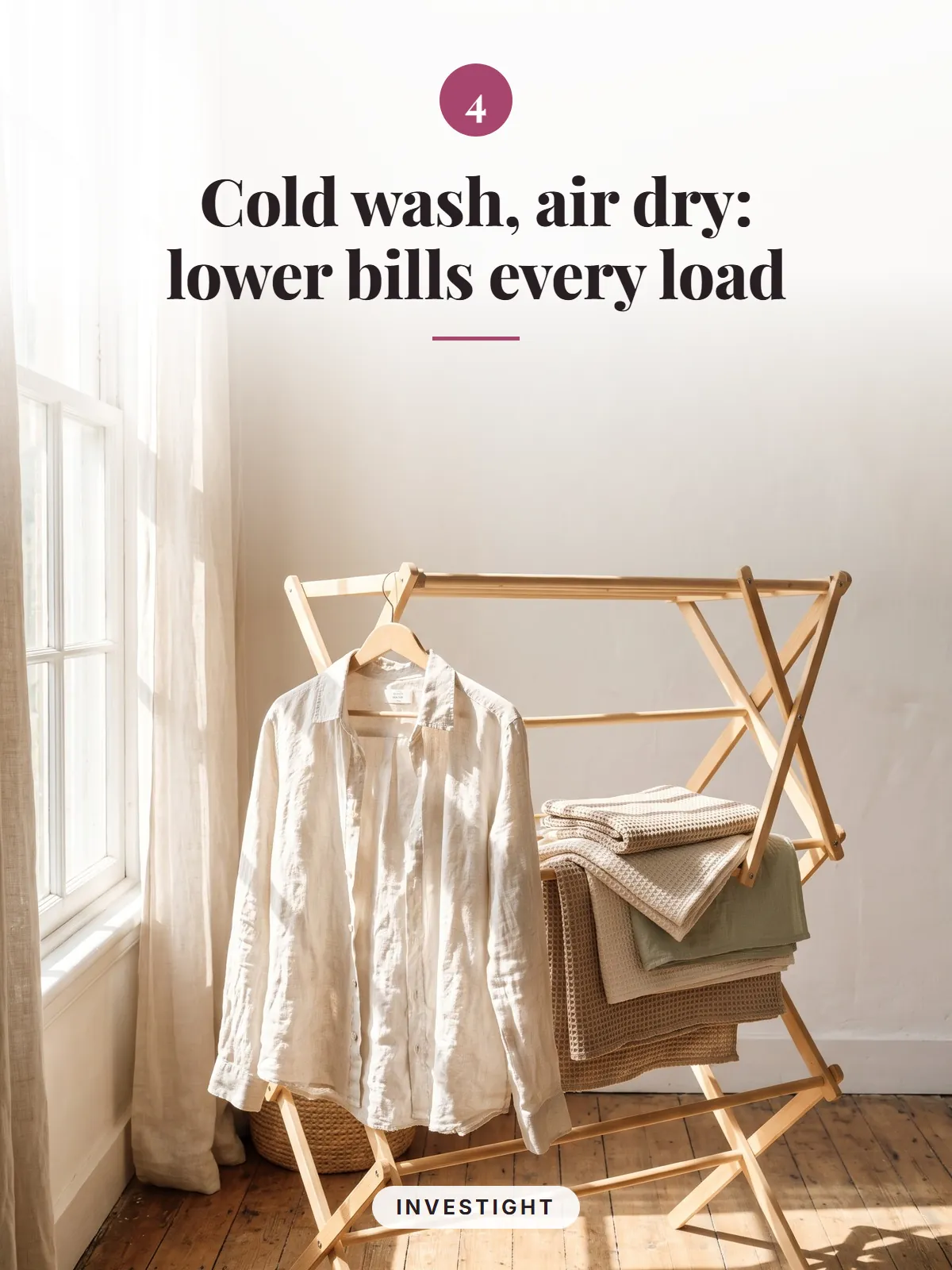
Most of the energy a washing machine uses goes to heating water. Cold cycles clean everyday laundry just fine, and air-drying a few loads a week saves dryer energy too.
20. Fix Small Things Before They Grow
A dripping faucet, a running toilet or a worn door seal costs little to fix today and a lot later. Online repair videos can walk you through most small fixes with basic tools.
21. Make Simple Cleaners
White vinegar, baking soda and dish soap handle most household cleaning for a fraction of the cost of brand-name sprays. Never mix vinegar or ammonia with bleach.
22. Unplug Devices You Rarely Use
Chargers, game consoles and old electronics can draw power even when off. A power strip you switch off at night makes it easy.
23. Take Care of What You Own
Clothes last longer when washed less often and stored well. Shoes last longer with a quick clean. Tools last longer when they are dried and put away. Every year an item lasts is a year you do not replace it.
Frugal Shopping Habits
Frugality is not about never buying things. It is about buying the right things once.
24. Judge Purchases by Cost per Use
A $90 pair of boots worn 300 times costs 30 cents per wear. A $30 pair that falls apart after 30 wears costs $1 per wear. Cost per use is the simplest way to decide when spending more actually saves money.
25. Use the 72-Hour Rule
Put anything nonessential in your cart and wait three days. Most of the urge fades, and so does the purchase. For bigger items, wait 30 days.
26. Check Secondhand First
Furniture, kids' clothes, tools, books and sports gear lose value fast. Thrift stores, consignment shops and local marketplace listings let someone else take that loss.

27. Unsubscribe From Store Emails
Fewer sale alerts means fewer reasons to shop. Keep only the stores you buy from regularly, and delete shopping apps you open out of boredom.
28. Borrow Before You Buy
Libraries lend books, movies, audiobooks and sometimes tools and kitchen gadgets. Neighbors often have the ladder or carpet cleaner you only need once a year.
29. Use Coupons and Cashback on What You Already Buy
Coupons and cashback apps only save money on things you would buy anyway. Check them for your usual groceries and household items, and ignore deals that tempt you into extras.
Frugal Living Tips for Families
Families have more costs, but also more ways to share and reuse.
30. Swap Kids' Clothes and Toys
Children outgrow clothes in months. Swapping with friends, cousins and neighbors keeps closets full without new spending.
31. Plan Low-Cost Family Fun
Parks, library events, hiking trails, no-cost museum days and backyard movie nights cost little or nothing and often become the best memories.
32. Give Kids a Small Budget
Let children manage a small amount for treats or toys. When the money is theirs, they compare prices and skip impulse buys surprisingly fast.
Frugal Mindset Habits That Make It Stick
The tips above work best with a little structure behind them.
33. Give Yourself a Fun Allowance
Pick a fun budget you can enjoy without guilt. Frugality that feels like punishment rarely lasts. A small, planned treat keeps you on track for the long run.
34. Spend on What You Value, Cut the Rest
Minimalism helps here. Ask whether each purchase earns its space and its cost. Spend freely on the few things you love, and cut everything else.
35. Send the Savings Somewhere on Purpose
Move what you save into a named account the same day. Otherwise it disappears into everyday spending. If you cut $40 from your phone bill, set up a $40 monthly transfer to savings.
Frugal Living on a Low Income
When money is already tight or your cost of living is high, frugal living is less about cutting extras and more about protecting essentials and avoiding fees.
Start with the costs that grow when money is short: late fees, overdraft fees and high-interest borrowing. Turning on low-balance alerts and autopay for fixed bills can prevent $30 to $70 in fees in a single bad month.
Next, look for programs you may qualify for. Many internet providers offer discounted plans for qualifying households, utilities often have budget billing or assistance programs, and food banks and community pantries can stretch a grocery budget.
Meal planning, cooking at home and buying secondhand work at any income. On a low income, every $20 saved matters more, and a small cushion of even $200 can keep a surprise from becoming debt.
Old-Fashioned Frugal Habits That Still Work
Many of the frugal habits our grandparents used still save real money today.
Use it up, wear it out, make it do. Finish the shampoo bottle, mend the shirt, wait until the old phone actually stops working. Grow a few herbs or tomatoes in pots. Hang laundry outside on sunny days. Cook from scratch with simple ingredients.
These habits are not about doing without. They are about getting full value from what you already have, which is the heart of every good frugal living plan. For more ideas, browse our frugal living guides.
How Much Frugal Living Can Save: A Real Example
Here is what a typical household might save in the first month after picking eight tips from this list.
| Change | Monthly Savings |
|---|---|
| Lower phone plan after one call | $30 |
| Rotate two streaming services | $20 |
| Meal planning and one pantry week | $150 |
| Coffee at home four days a week | $70 |
| Packed lunch three days a week | $90 |
| Thermostat schedule and cold laundry | $25 |
| 72-hour rule on online shopping | $80 |
| Store brands on basics | $35 |
| Total | $500 |
That is $6,000 a year, from habits that take very little time once they are set up. Send the savings to a goal, like an emergency fund or a debt, and the progress becomes visible fast. Our money saving challenges turn that monthly amount into a game with a tracker.
Frugal Living Mistakes to Avoid
Trying everything at once. Thirty-five new habits in one week leads to burnout. Pick three, make them automatic, then add more.
Cutting what you love. If you give up the one thing that makes you happy, the plan will not last. Cut the things you do not care about instead.
Buying cheap things that break. Low prices on low-quality items often cost more in the long run. Use cost per use.
Not moving the money. Savings that stay in checking get spent. Transfer what you save the same day.
Your 30-Day Frugal Living Checklist
Work through one line every few days. By the end of the month, your budget will have real breathing room.
- List every recurring bill from your last two statements
- Cancel one subscription you have not used in 30 days
- Call one provider and ask for a lower rate
- Plan this week's dinners around what is already in the fridge
- Set a weekly grocery number and write it on the list
- Schedule your thermostat and switch laundry to cold
- Unsubscribe from five store email lists
- Move what you saved this month into a named savings account
Frequently Asked Questions
What is the difference between frugal and cheap?
Cheap means buying the lowest price no matter what. Frugal means spending carefully on things that last and that you value, and cutting the rest. A frugal person may pay more for boots that last ten years.
How much can frugal living really save?
It depends on your starting point, but cutting recurring bills, groceries and impulse buys often saves a typical household $300 to $600 a month.
Which frugal living tip should I start with?
Start with recurring bills. One afternoon of calls and cancellations keeps saving every month, with no daily willpower required. Meal planning is a close second.
Can frugal living work on a low income?
Yes. Avoiding fees, meal planning, cooking at home and buying secondhand work at any income, and every dollar saved matters more when money is tight.
How do I start frugal living as a beginner?
Pick three tips for the next 30 days, such as listing your bills, meal planning and the 72-hour rule. Move what you save to a separate account, then add new habits once those feel easy.
How can I be frugal without feeling deprived?
Keep a small fun allowance and spend freely on the few things you truly value. Cut the things you do not care about, not the things that make you happy.
Pick Three Tips and Start This Week
Saving money does not take a dramatic lifestyle change. It takes a few smart moves, repeated until they feel normal.
Choose three of these frugal living tips, print the 30-day checklist and start with your bills this week. Small, steady changes add up faster than you think.

Pin this guide to your money board
Save this saving money guide on Pinterest so the numbers and checklist are there when you need them.
Save on PinterestThis guide is general education, not individualized financial, tax, or investment advice. Figures reflect rules in effect on Nov 20, 2026. See our financial disclaimer.
