

A savings challenge printable is a tracker with boxes, each worth an amount. Every time you save that amount, you color in a box, and when every box is filled, you hit your goal. Below are 12 trackers from $100 in 30 days to $10,000 in a year, so you can pick one that fits your paycheck, then print it and start.
Pick a savings challenge printable that fits your pay: 12 trackers from $100 in 30 days to $10,000 in a year, including biweekly and low-income versions.
Trackers work because they make progress visible. A balance in an app is easy to ignore. A sheet on your fridge with 18 of 40 boxes colored in is not.
Each challenge below shows the total, how long it takes, the weekly average and who it suits, followed by its printable. You will also find tips for choosing one and sticking with it.
Table of Contents 23 sections
Savings Challenges at a Glance
Weekly averages make it easy to compare. Pick a challenge where the weekly amount feels a little uncomfortable, not painful.
| Challenge | Total | Time | Weekly Average | Best For |
|---|---|---|---|---|
| $100 in 30 days | $100 | 1 month | about $23 | A first try or a tight month |
| Low-income $250 | $250 | 10 weeks | $25 | Small, flexible deposits |
| $500 in 3 months | $500 | 13 weeks | about $38.46 | A quick goal or a holiday |
| $1,000 mixed boxes | $1,000 | Your pace | Varies | An emergency fund |
| $1,000 in 6 months | $1,000 | 26 weeks | $38.46 | Steady weekly saving |
| Monthly $1,200 | $1,200 | 12 months | about $23 | People paid monthly |
| 50 envelope | $1,275 | 25 weeks | $51 | Cash stuffing fans |
| 52 week | $1,378 | 52 weeks | $26.50 | A year-long habit |
| Biweekly $2,000 | $2,000 | 26 paychecks | $38.46 | Biweekly pay |
| 100 envelope | $5,050 | 50 weeks | $101 | A bigger cash goal |
| Biweekly $5,000 | $5,000 | 26 paychecks | $96.15 | A full emergency fund |
| $10,000 | $10,000 | 52 weeks | $192.31 | Down payments and big goals |
1. $100 in 30 Days
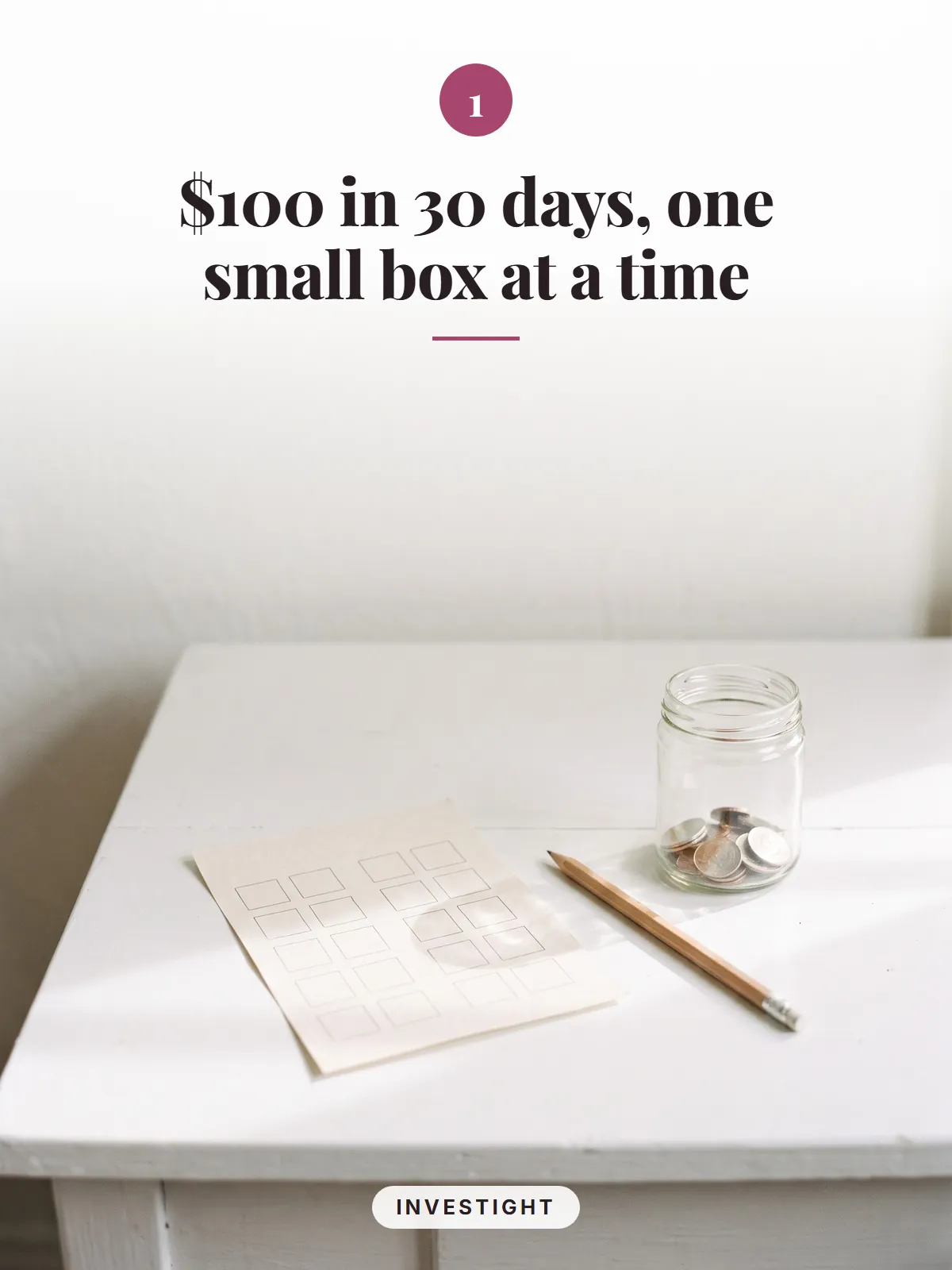
The smallest challenge is the best place to start. Thirty boxes of $2, $3 and $5 add up to $100. Color any box that fits the day, so a tight week still counts.
2. Low-Income $250 Challenge
Built for small, irregular deposits: ten $5 boxes, ten $10 boxes and five $20 boxes. If a week has no room, skip it and color two boxes the next week. The finish line is what matters.
3. $500 in 3 Months
Forty boxes from $5 to $20 add up to $500 in about 13 weeks. It is a good size for a holiday fund, a car repair cushion or a weekend trip.
4. $1,000 Mixed Boxes
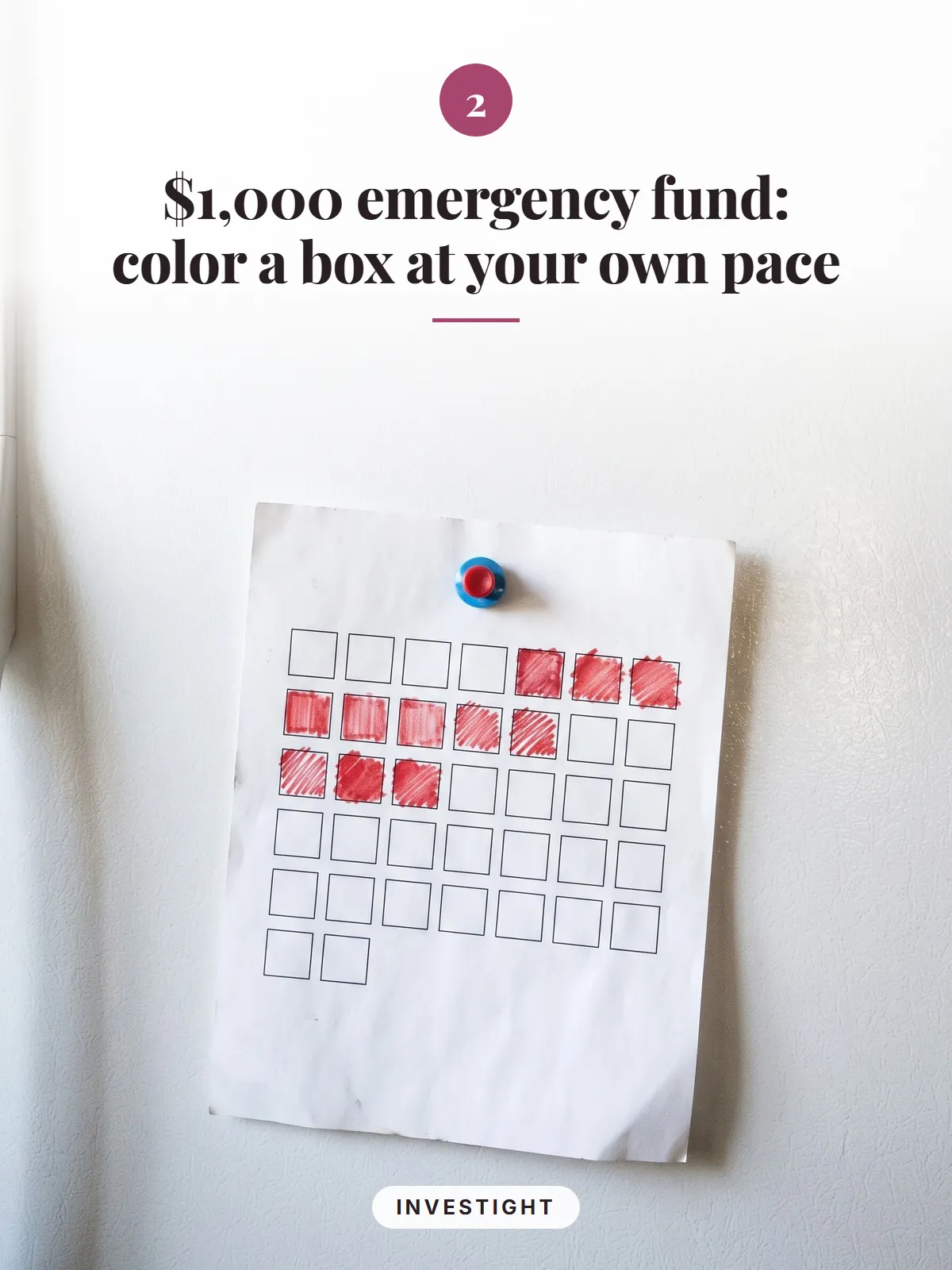
This is the classic starter emergency fund tracker. Forty boxes from $10 to $45 reach $1,000 at whatever pace your budget allows. Color a $10 box in a lean week and a $45 box after a good one.
5. $1,000 in 6 Months
Prefer the same amount every week? Save $38.46 a week for 26 weeks and you will have about $1,000. Set it as an automatic transfer and color a box each Friday.
6. Monthly $1,200 Challenge
For people paid once a month: save $100 each month and color one box. Twelve boxes later, you have $1,200, enough for a small emergency fund or next year's holidays.
7. 50 Envelope Challenge
Number 50 envelopes from $1 to $50, fill two a week, and you have $1,275 in 25 weeks. It is a shorter version of the popular 100 envelope challenge, and it is great if you love cash stuffing.
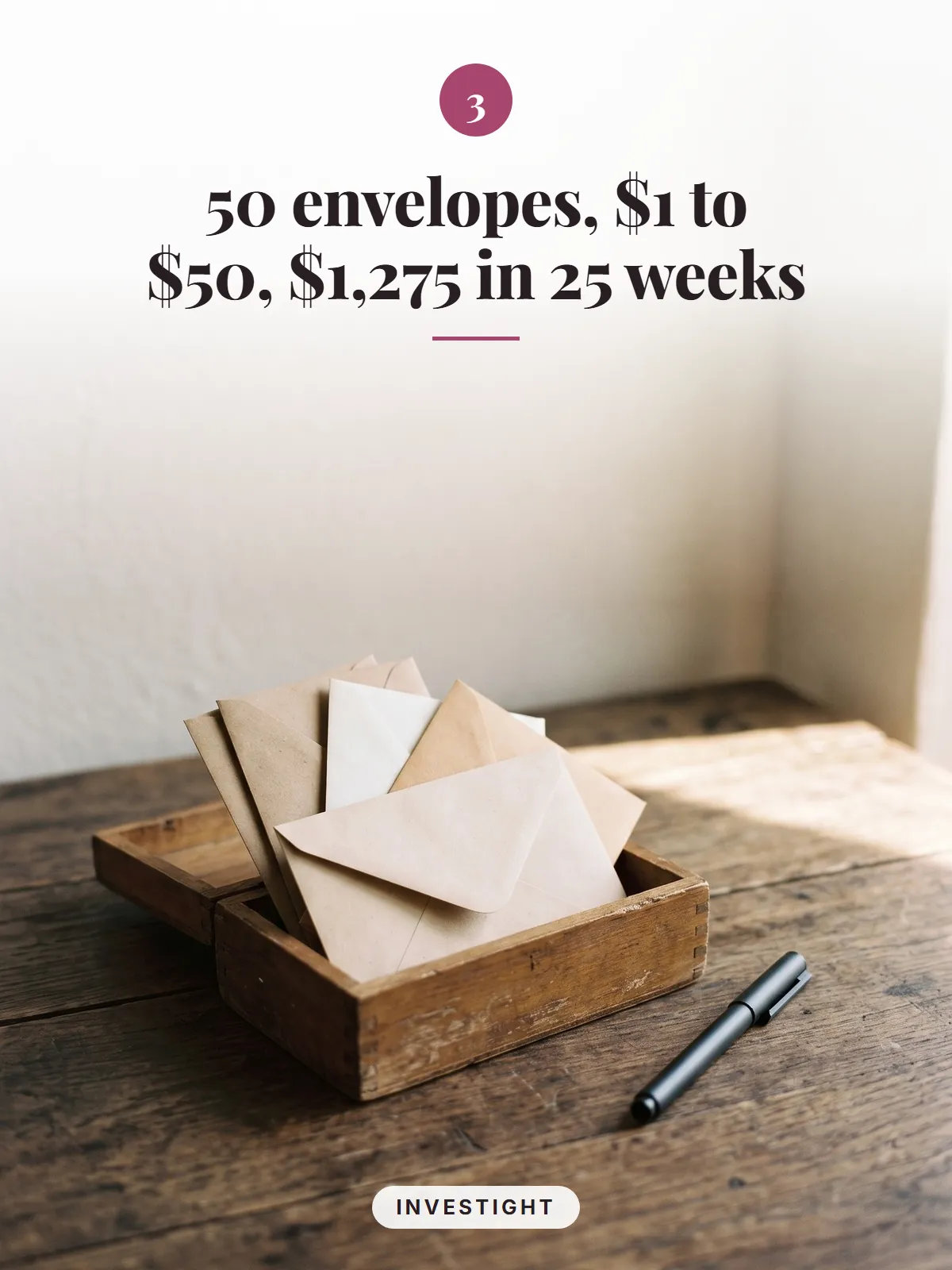
Pair a high number with a low one, like 50 and 1, so every week costs $51. Deposit the cash in a savings account every month so it stays safe.
8. 52 Week Challenge
Save $1 in week one, $2 in week two, up to $52 in week 52, for $1,378 in a year. If you want reverse, double, $5,000 or $10,000 versions, our 52 week money saving challenge guide has a printable for each.
9. Biweekly $2,000 Challenge
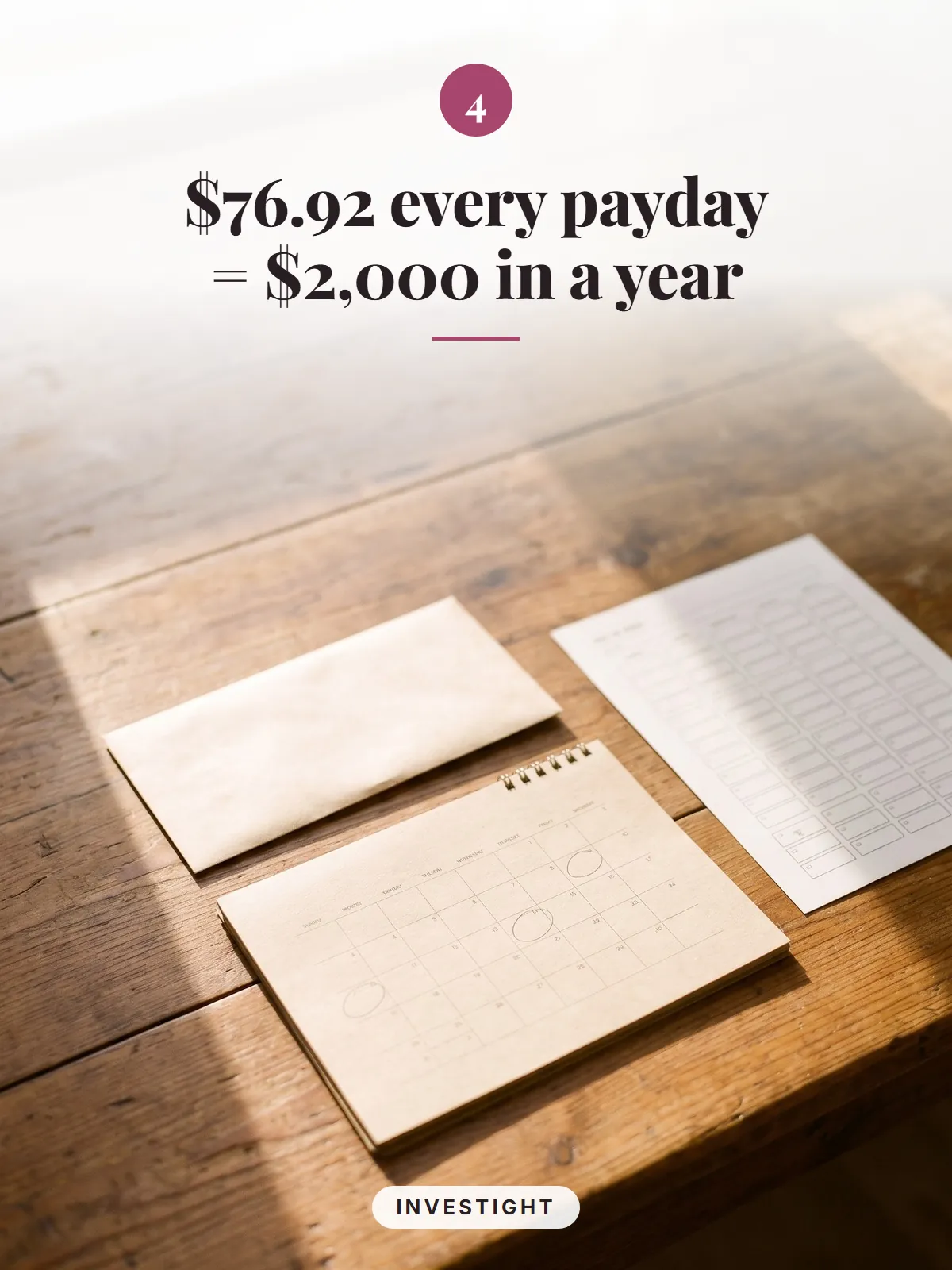
Built for biweekly paychecks: save $76.92 on each of your 26 paychecks and reach about $2,000 in a year. It fits neatly between rent and the second-check bills.
10. 100 Envelope Challenge
The big one: 100 envelopes from $1 to $100, two a week, for $5,050 in 50 weeks. Pair a high and a low number each week to keep every week at $101.
11. Biweekly $5,000 Challenge
A full emergency fund in one year on biweekly pay: $192.31 per paycheck, 26 times, reaches about $5,000. Automate it on payday morning so it happens before you spend.
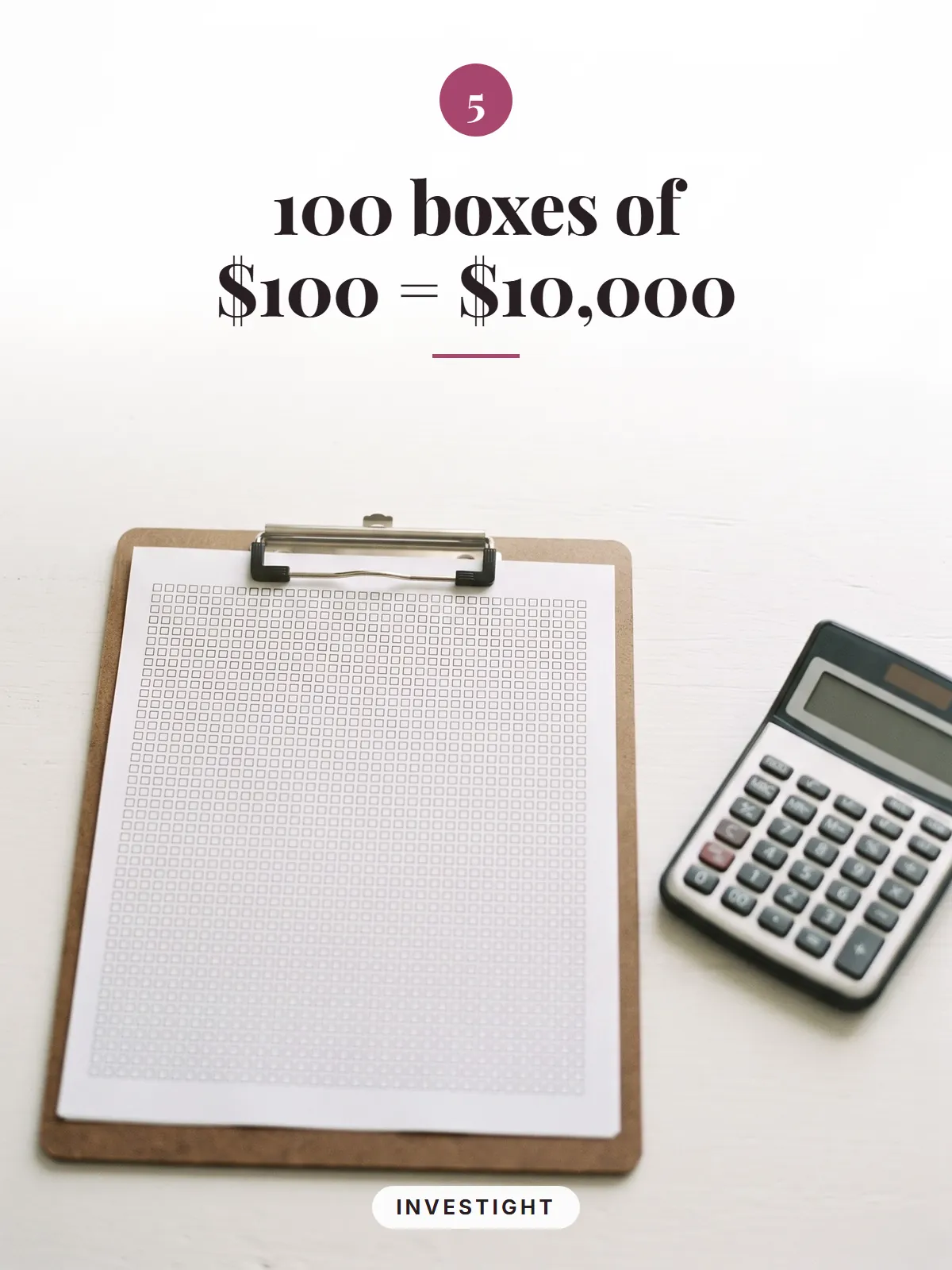
12. $10,000 Savings Challenge
One hundred boxes of $100. At $192.31 a week, that is about two boxes a week for a year. It is a serious goal for a home down payment, a car paid in cash or a full emergency fund.
The Best Savings Challenge for Each Goal
Matching the challenge to the goal makes it easier to stay motivated. Here is a quick guide by what you are saving for.
Emergency fund: start with the $1,000 mixed-box tracker, then move to the biweekly $5,000 challenge. A starter cushion first, then a fuller one.
Holidays and gifts: the $500 challenge started in summer, or a $1,000 challenge started in January, covers a typical family Christmas in cash.
Travel: the 52 week challenge or the biweekly $2,000 challenge suits a summer trip planned a year ahead.
A car or a home down payment: the $10,000 challenge or the 100 envelope challenge. Big goals need big trackers, and seeing 100 boxes slowly fill is powerful motivation.
Debt payoff: use any tracker with the boxes as extra payments. Color a box every time you pay above the minimum.
Where the Money Comes From on a Tight Budget
A savings challenge needs money from somewhere. If your budget already feels tight, these are the most realistic sources.
Small recurring cuts: one subscription, a cheaper phone plan or a lower insurance quote can save you $20 to $60 a month without changing daily life. Move that exact amount to savings on the same day each month.
Spending you can pause for a few weeks: takeout, coffee runs and online shopping. A no-spend weekend often frees enough to color several boxes at once.
Windfalls: tax refunds, rebates, birthday money and small bonuses. Sending half of every windfall to your challenge speeds it up without touching your monthly budget.
Selling unused things: clothes, toys, furniture and electronics sitting in closets can add $50 to $200 quickly. It clears space and fills boxes at the same time.
Make Your Savings Challenge a Game
The more fun a challenge feels, the more likely you are to finish it. Small touches make a big difference.
Use colors that make you happy, or a different color for each month, so you can see your pace at a glance. Add a small reward at the halfway point, like a favorite home-cooked dinner or a movie night.
Race a friend or a partner. Pick the same challenge and compare trackers every Sunday. A little friendly competition keeps both of you going.
Share your progress. Many people post their trackers in savings groups or on Pinterest boards, and the encouragement is surprisingly motivating on slow weeks.
How to Print and Display Your Tracker
A tracker only works if you see it. Print it on plain letter-size paper, or on card stock if you want it to last all year on the fridge.
Put it where you will pass it every day: the fridge, the inside of a closet door, your desk or the front of your budget binder. Keep a pen or a set of colored pencils right next to it so coloring a box takes two seconds.
If you prefer digital, open the printable on a tablet and mark it with a note app, or take a photo of the paper copy each week. Either way, the habit is the same: save, then mark it right away.
What to Do When You Finish a Challenge
Finishing a challenge is worth celebrating, and it is also the perfect moment to plan the next step.
Move the money where it belongs. If the challenge was for a trip, transfer it to a trip account. If it was an emergency fund, leave it alone and enjoy knowing it is there.
Then pick the next challenge while the habit is strong. Many people step up to a bigger goal, or switch to a challenge for a different purpose, like a holiday fund. The weekly saving routine you built is now automatic, and that habit is worth more than any single total.
How to Choose the Right Savings Challenge Printable
Start with the weekly average in the table. Pick the challenge where that number feels a little uncomfortable but still fits your budget in your tightest month.
Then match it to your pay schedule. If you are paid every two weeks, the biweekly trackers line up with your paychecks. Paid monthly? The monthly challenge or a mixed-box tracker works better.
If your income changes a lot, choose a mixed-box tracker. You color small boxes in lean weeks and bigger ones in good weeks, and you still finish.
Finally, name the goal. "Emergency fund" or "Summer trip" at the top of the sheet makes it much harder to quit in week 15. More ideas are in our savings challenges hub.
Tips to Actually Finish Your Challenge
Put the tracker where you will see it daily, like the fridge, a mirror or the inside of a cabinet. Out of sight really is out of mind.
Move the money the same day you color the box. Coloring without transferring is the most common way these challenges quietly fall apart.
Keep the savings in a separate savings account, ideally a high-yield one, so it earns a little interest and stays away from your debit card.
If you miss a week, do not start over. Just color the next box when you can. A savings tracker is a tool for building the habit, not a test you can fail.
Printing Tips for Your Savings Trackers
Every tracker opens on its own page with a print button. Print on regular letter paper, or save it as a PDF if you would rather fill it in on a tablet.
For a sturdier tracker, print on card stock and pin it to a cork board. If you want to repeat a challenge, slide the page into a sheet protector and color with a dry-erase marker.
Smaller trackers, like the $100 and $250 challenges, fit nicely inside a cash envelope binder or a planner. Fold them in half and keep them with your budget pages so every check-in starts with a quick look at your progress.
Frequently Asked Questions
What is the easiest savings challenge to start with?
The $100 in 30 days challenge or the low-income $250 challenge. Both use small boxes, so you can start this week and finish fast, which builds confidence for a bigger goal.
How do I use a savings challenge printable?
Print the tracker, put it somewhere you see every day, and color a box each time you move that amount into savings. When all the boxes are colored, you have reached the goal.
What savings challenge is best for biweekly pay?
The biweekly trackers: $2,000 at $76.92 per paycheck or $5,000 at $192.31 per paycheck. They line up with your 26 paychecks a year.
How can I save $10,000 in a year?
Save about $192.31 a week, or about $384.62 per biweekly paycheck. The $10,000 tracker splits it into 100 boxes of $100 so you can see your progress.
What savings challenge should I do for an emergency fund?
Start with the $1,000 mixed-box tracker, which lets you save at your own pace. Once it is full, move to the biweekly $5,000 challenge to build a fuller cushion.
How do I find money for a savings challenge on a tight budget?
Cut one or two recurring costs, pause takeout and online shopping for a few weeks, send half of every windfall to savings and sell things you no longer use.
What should I do after finishing a savings challenge?
Move the money to the account for its goal, celebrate in a low-cost way and start the next challenge while the habit is strong, often with a bigger goal or a new purpose.
Can I make my own savings challenge printable?
Yes. Write your goal, divide it into boxes of different amounts that add up to the total and color one whenever you save. The printables here do that math for you at common goal sizes.
Do savings challenges actually work?
They work best when the money goes to a separate account and you save on a fixed day. The tracker itself does not save money, but seeing progress makes it much easier to keep going.
What is the easiest savings challenge for beginners?
A $1,000 mixed-box tracker or the 26 week challenge is a good place to start. Both are short enough to finish and flexible enough to fit a tight month. Once you finish one, try a bigger goal.
Print One Savings Challenge and Color Your First Box Today
Do not wait for a new month. Pick the challenge that fits your paycheck, print it and color your first box with your next transfer, even if it is just $2.
Small, visible wins add up. With the right savings challenge printable on your fridge, saving stops feeling like a chore and starts feeling like a game you are winning.
Pin this guide to your money board
Save this saving money guide on Pinterest so the numbers and checklist are there when you need them.
Save on PinterestThis guide is general education, not individualized financial, tax, or investment advice. Figures reflect rules in effect on Nov 20, 2026. See our financial disclaimer.
