
Here is how to save money on gas: drive more smoothly, keep your tires properly inflated, stop idling, combine errands into one trip and use gas rewards on fill-ups you already make. Smooth driving alone can make a big difference, because aggressive acceleration and braking waste a lot of fuel.
Learn how to save money on gas with 30 tips: smoother driving, tire pressure, less idling, gas rewards and smarter trips that lower your monthly fuel bill.
According to the U.S. Department of Energy's fueleconomy.gov, aggressive driving can lower gas mileage by roughly 15% to 30% at highway speeds and 10% to 40% in stop-and-go traffic. That is money burned for a few seconds saved.
Below are 30 tips grouped by driving habits, car care, trip planning and paying less at the pump, plus a sample of what the savings can add up to.
Savings depend on your car, your driving and local gas prices, so treat the numbers as rough guides.
Table of Contents 19 sections
Easy Ways to Save on Gas
Rough impact based on fueleconomy.gov guidance. Results vary by car and driving.
| Tip | Effort | Impact |
|---|---|---|
| Drive smoothly, no hard starts or stops | Habit | High |
| Slow down on the highway | Habit | Medium to high |
| Keep tires properly inflated | 5 minutes a month | Small but steady |
| Stop idling | Habit | Small to medium |
| Remove roof racks and extra weight | 10 minutes | Small to medium |
Driving Habits That Save Gas
How you drive affects gas mileage more than almost anything else.
1. Accelerate Gently
Press the gas pedal smoothly from a stop. Quick starts burn far more fuel than easing up to speed.
2. Brake Early and Coast
Look ahead and lift off the gas early when you see a red light or slowing traffic. Coasting uses much less fuel than speeding up and braking hard.
3. Slow Down on the Highway
Gas mileage usually drops quickly at speeds above about 50 mph. Driving a little slower on the highway can save fuel on every long trip.
4. Use Cruise Control on Open Roads
Cruise control keeps a steady speed on flat highways, which helps fuel economy. Turn it off on hills, where it can waste gas.
5. Stop Idling
Idling can burn a quarter to a half gallon of fuel per hour, depending on the engine and air conditioning use. If you will be parked for more than a short time, turn the engine off where it is safe and legal.
6. Avoid Rush Hour When You Can
Stop-and-go traffic wastes fuel. Shifting a commute or errand by even 30 minutes can mean smoother driving.
7. Use the Air Conditioning Wisely
At low speeds, opening windows may save fuel. At highway speeds, open windows add drag, so air conditioning can be the better choice.
8. Drive Your Most Efficient Car
If your household has two cars, use the one with better gas mileage for most trips, especially long ones.
Car Care That Saves Gas
A well-maintained car uses fuel more efficiently and avoids expensive repairs.
9. Keep Tires Properly Inflated
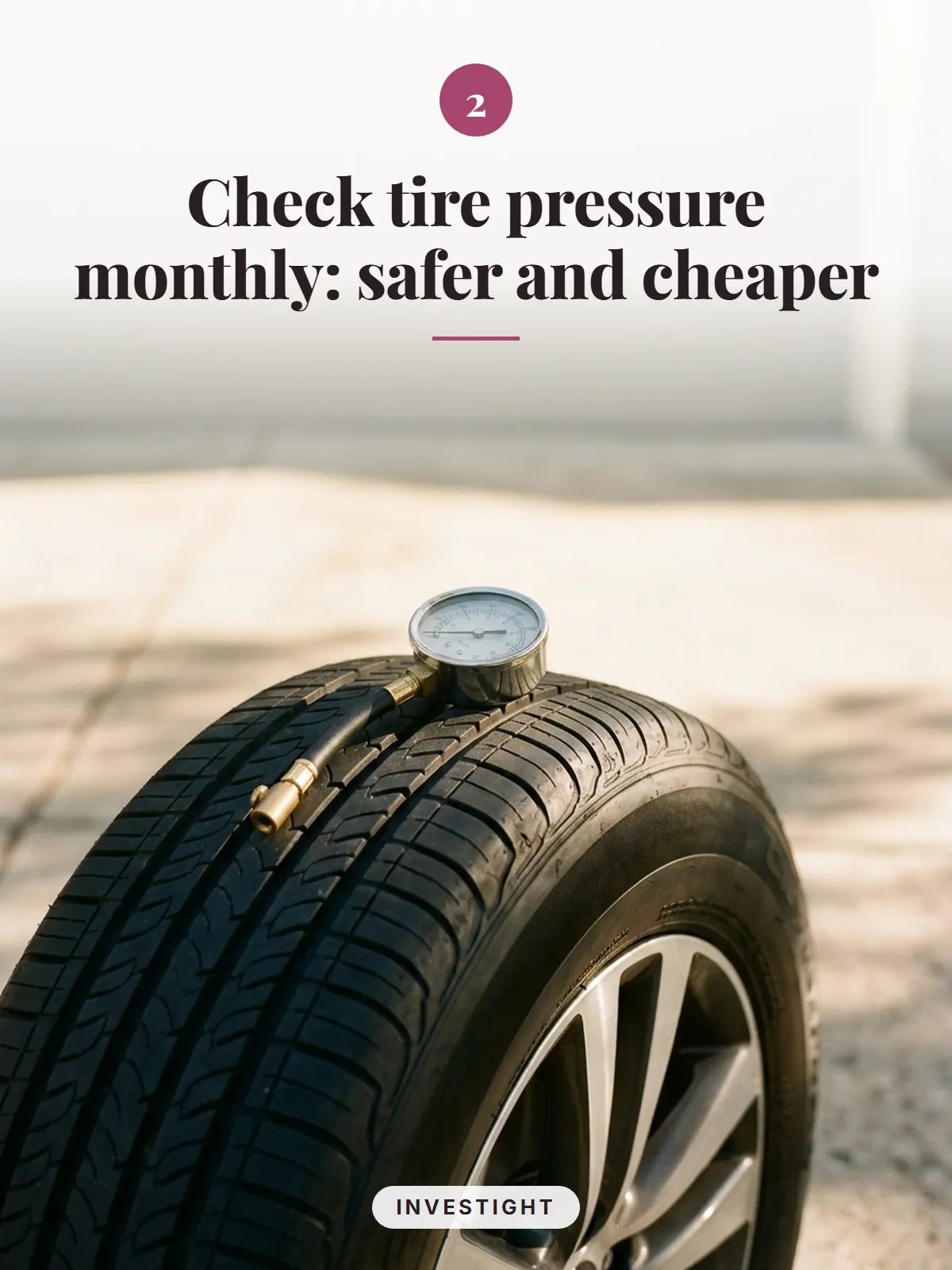
Check tire pressure once a month and before long trips, using the number on the sticker inside the driver's door, not the tire sidewall. Properly inflated tires improve gas mileage a little and last longer.
10. Use the Recommended Motor Oil
Using the grade of oil recommended in your owner's manual can help fuel economy slightly.
11. Follow the Maintenance Schedule
Regular maintenance keeps the engine running efficiently. A car that is badly out of tune can use noticeably more fuel.
12. Fix Warning Lights Promptly
A check engine light can signal problems that hurt fuel economy, like a faulty sensor. Get it checked rather than ignoring it.
13. Remove Extra Weight
Extra weight in the trunk lowers gas mileage. Remove sports gear, tools and boxes you do not need to carry.
14. Take Off Roof Racks and Cargo Boxes
Rooftop carriers add drag and can significantly reduce fuel economy, especially on the highway. Remove them when not in use.
15. Use the Right Gas
If your owner's manual says regular gas, premium usually brings no benefit. Use the octane your car requires.
Trip Planning That Saves Gas
The cheapest mile is the one you do not drive.
16. Combine Errands Into One Loop
A warm engine is more efficient than a cold one. Plan errands in one trip and in a logical loop instead of several short trips.

17. Carpool to Work or School
Sharing rides with coworkers or other parents can cut fuel costs in half or more for regular trips.
18. Walk or Bike Short Trips
Very short trips in a cold engine use fuel inefficiently. Walk or bike when distances and weather allow.
19. Use Public Transit When It Works
A transit pass can be cheaper than gas and parking, especially in cities with good service.
20. Work From Home When Possible
Even one remote work day a week cuts commuting fuel by about 20%.
21. Shop Online for Pickup
Grocery pickup or online orders can replace several store trips, but watch for fees and extra spending.
Ways to Pay Less at the Pump
These tips lower the price you pay per gallon.
22. Compare Prices With a Gas App
Gas prices can vary noticeably between nearby stations. Check an app before you fill up, but do not drive far out of your way to save a few cents.
23. Join Grocery and Gas Rewards Programs
Many grocery stores and gas chains offer cents-off per gallon for purchases or membership. Use them only on shopping you already do.
24. Use a Gas Rewards Credit Card Carefully
Some cards offer extra cash back on gas. They only save money if you pay the balance in full every month.
25. Pay With Cash or Debit If It Is Cheaper
Some stations charge less per gallon for cash or debit. Check the posted prices.
26. Fill Up Before Long Road Trips
Gas near highways and in remote areas can cost more. Fill up in town before you leave.
27. Consider Warehouse Club Gas
If you already have a warehouse club membership, their gas stations often have lower prices.
Bigger Changes That Save Gas
These take more planning but can make a big difference over years.
28. Choose a More Efficient Next Car
When it is time to replace your car, compare fuel economy ratings carefully. A few more miles per gallon adds up over many years.
29. Consider a Hybrid or Electric Vehicle
For people who drive a lot, a hybrid or electric vehicle can lower fuel costs. Compare purchase price, charging access and incentives before deciding.
30. Live Closer to Work When You Move
When you move, factor commuting costs into the decision. A shorter commute saves fuel, time and wear on your car.
How to Save Money on Gas on a Road Trip
Road trips are where gas costs add up fastest. Pack light, skip the roof box if you can and keep a steady speed with cruise control on flat highways.
Fill up in town before you reach the highway, and use a gas price app to plan stops at cheaper stations along your route. Stopping at a station a mile off the exit is often cheaper than the one right at the ramp.
Plan the route to avoid rush hour in big cities, and take breaks at rest areas instead of idling in parking lots with the engine running. For a family, packing snacks and drinks also saves on the pricey convenience-store stops that often come with every fill-up.
How to Save Money on Gas as a Commuter
Commuting is often the biggest share of a household's gas bill. Ask about carpooling with coworkers, compare transit options and check whether your employer offers commuter benefits or remote work days.
If you drive alone, try leaving 15 minutes earlier or later to miss the worst traffic. Smoother traffic means better mileage and less stress. Track your commute costs for a month; seeing the real number often motivates a change.
How to Figure Out Your Real Cost per Mile
Divide the price per gallon by your car's miles per gallon. At $3.50 a gallon and 25 mpg, each mile costs about 14 cents in gas. A 20-mile round trip costs about $2.80.
Knowing your cost per mile helps with decisions like whether a farther store's lower prices are worth the drive. If you drive 10 extra miles to save $2 on groceries, you barely break even on gas, without counting your time.
Teen Drivers and Gas Money
If you have a teen driver, agree on a monthly gas budget and who pays for what. Many families split costs, which teaches teens the real price of driving.
Teach smooth driving habits from day one: gentle starts, early braking and no idling. These habits save gas and make teens safer drivers at the same time.
What the Savings Can Add Up To
Imagine a driver who uses about 50 gallons of gas a month at $3.50 a gallon, or $175. Smoother driving that improves mileage by 10%, plus combining errands that cuts 5% of miles, could lower usage by about 7 gallons a month.
That is roughly $25 a month or $300 a year, from habits that cost nothing. Add a grocery rewards discount of 10 cents a gallon and you save about $5 more each month. The exact numbers depend on your car and driving, but small changes add up.
Budget for Gas So It Never Surprises You
Look at your last three months of gas spending and set a monthly gas budget slightly above the average. Track it each week, and if it runs high, look at the trips that caused it.
If gas prices spike, adjust other flexible categories for a month rather than putting fuel on a credit card. For more ways to cut everyday costs, see our how to save money fast guide and our frugal living guides.
Save on Other Car Costs Too
Gas is only part of what a car costs. Shopping your car insurance every year, keeping up with maintenance to avoid big repairs and comparing prices for routine services like oil changes and tires can save more than gas habits alone.
Ask about discounts for safe driving, bundling home and auto insurance, low mileage or completing a defensive driving course. If you drive much less than before, tell your insurer, since some companies charge less for low-mileage drivers.
Keep a simple car sinking fund for repairs and registration, so surprise bills do not end up on a credit card. A small monthly amount makes car costs predictable.
A Simple Gas Log
For one month, write down every fill-up: the date, gallons, price and odometer reading. Divide miles driven by gallons used to find your real mileage.
Once you know your baseline, try a few of the tips above and compare the next month. Seeing your mileage rise from, say, 24 to 27 miles per gallon is a strong reason to keep the new habits.
Gas Saving Habits for Families
Families often drive the most, between school, activities and errands. Set up carpools with other parents for practices and school runs, and plan the week's activities so trips line up.
Keep a list on the fridge for errands, and add to it all week instead of making quick runs each time something comes up. One planned loop on Saturday can replace several weekday trips.
Gas Saving Myths
Some popular tips do not save much. Fuel additives that promise big mileage gains rarely deliver. Filling up in the early morning for "cooler, denser gas" makes little practical difference.
Premium gas in a car that only requires regular usually just costs more. Focus on the habits that really work: smooth driving, slower highway speeds, tire pressure and fewer trips.
Save Money on Gas Checklist
Start with these this week.
- Check and adjust tire pressure
- Remove extra weight and any unused roof rack
- Practice gentle starts and early braking
- Turn the engine off instead of idling
- Plan errands into one loop
- Download a gas price app
- Join your grocery store's fuel rewards
- Set a monthly gas budget
Frequently Asked Questions
What is the best way to save money on gas?
Drive more smoothly, slow down on the highway, keep tires properly inflated, avoid idling and combine errands into fewer trips. Gas rewards and price apps help lower what you pay per gallon.
Does tire pressure really affect gas mileage?
Yes. Underinflated tires increase rolling resistance and lower fuel economy a little, and they wear out faster. Check pressure monthly.
Is it better to use AC or open windows to save gas?
At low speeds, open windows may use less fuel. At highway speeds, open windows add drag, so the air conditioning can be more efficient.
Does premium gas improve mileage?
Usually not, unless your car requires it. Use the octane your owner's manual recommends.
How much gas does idling waste?
Idling can use a quarter to a half gallon of fuel per hour, depending on the engine and air conditioning use.
Are gas rewards credit cards worth it?
They can be if you pay the balance in full every month. Interest on a carried balance quickly wipes out any rewards.
Is it cheaper to fill up the tank or buy a little at a time?
The price per gallon is the same either way. Filling up fully means fewer trips to the station, while buying small amounts can help with cash flow. Choose what fits your budget.
Does warming up the car in winter waste gas?
Modern cars generally need only a short warm-up. Driving gently for the first few minutes warms the engine faster than idling and uses less fuel.
How much can I save on gas each month?
It depends on how much you drive. Many drivers save $20 to $40 a month by combining smoother driving, fewer trips and a rewards discount, and more if they carpool or work from home.
Do gas price apps really save money?
They can, when prices vary between nearby stations. The savings disappear if you drive far out of your way, so use them for stations along your normal route.
Should I drive farther to get cheaper gas?
Only if the station is close to your route. Calculate your cost per mile: driving 10 extra miles to save 10 cents a gallon on a 12-gallon fill-up usually costs more in gas than it saves.
Does a clean air filter improve gas mileage?
In most modern cars, a clogged air filter mainly affects acceleration rather than fuel economy, but replacing it on schedule still helps the engine run well.
Start Saving on Gas This Week
Pick three changes: check your tire pressure, practice smooth driving and plan your errands into one loop.
Track your fill-ups for a month and compare. Learning how to save money on gas is mostly about small habits that quietly pay you back every time you drive.
Pin this guide to your money board
Save this saving money guide on Pinterest so the numbers and checklist are there when you need them.
Save on PinterestThis guide is general education, not individualized financial, tax, or investment advice. Figures reflect rules in effect on Nov 21, 2026. See our financial disclaimer.
