
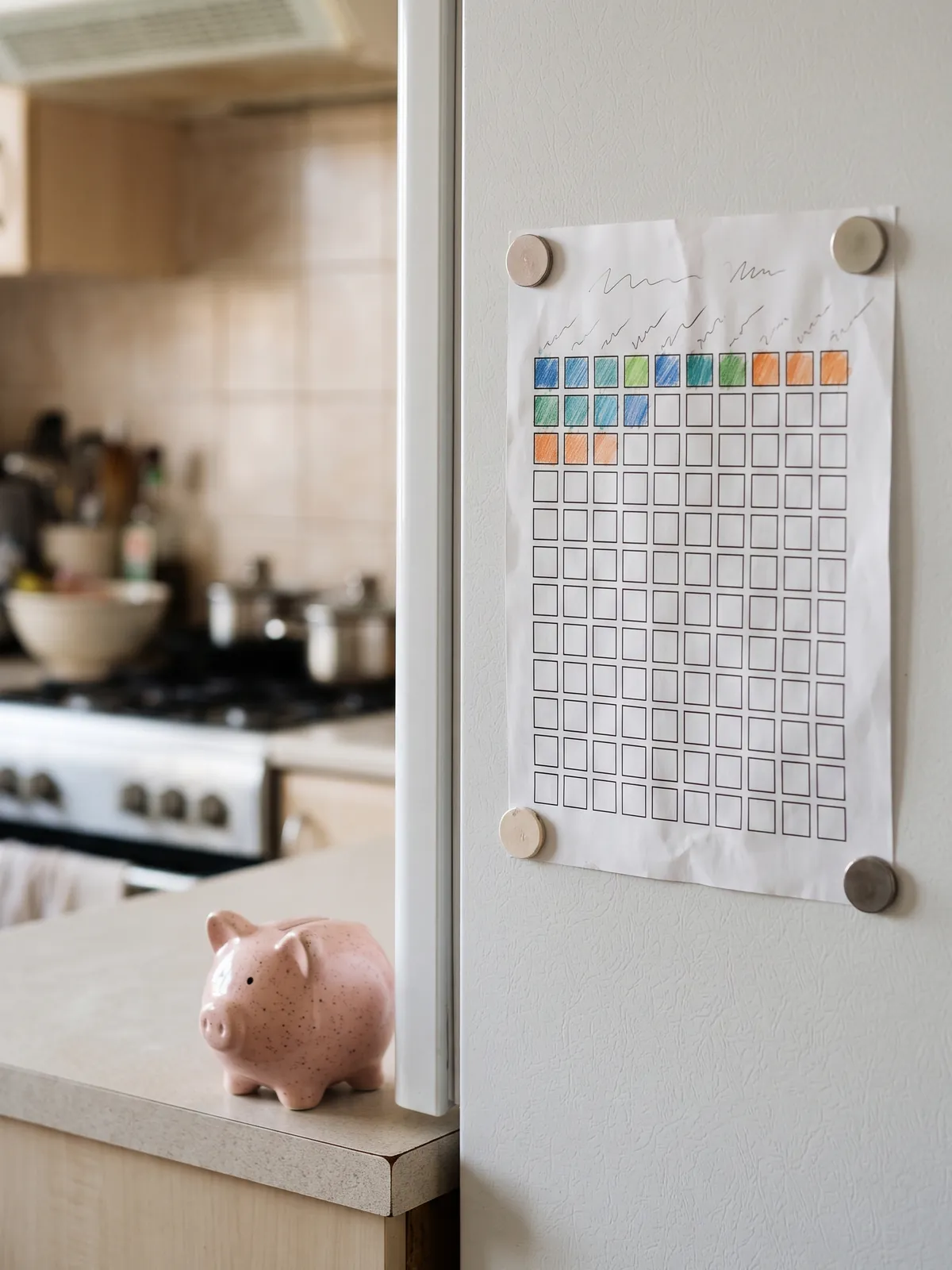
A 5k savings challenge is a plan to save $5,000 by a set date with small, regular deposits. Over one year, it takes $96.15 a week, $192.31 per biweekly paycheck or $416.67 a month. Pick the pace that fits your take-home pay, automate it on payday and color a tracker every time you save.
Plan a 5k savings challenge for your pay: $96.15 a week or $192.31 per biweekly paycheck for a year, faster 6 and 3 month plans, and 5 printable trackers.
$5,000 is often called the sweet spot of savings goals. It is big enough to change your finances, covering a real emergency fund for many single people or a solid down payment on a car, but small enough to reach in a year on an average income.
Below you will find the math for every time frame, what share of your pay it takes, a plan to find the money and five printable trackers.
Table of Contents 23 sections
How Much to Save for $5,000
Each amount is $5,000 divided by the number of deposits.
| Time Frame | Weekly | Biweekly | Monthly |
|---|---|---|---|
| 1 year | $96.15 | $192.31 | $416.67 |
| 6 months | $192.31 | $384.62 | $833.33 |
| 3 months | $384.62 | About $769.23 | $1,666.67 |
| 100 days | $350 a week ($50 a day) |
Step 1: Check the Share of Your Take-Home Pay
Compare the monthly amount with your take-home pay before you choose a pace. A one-year 5k savings challenge needs $416.67 a month. On $4,000 of take-home pay, that is about 10%, which most budgets can manage with a few changes.
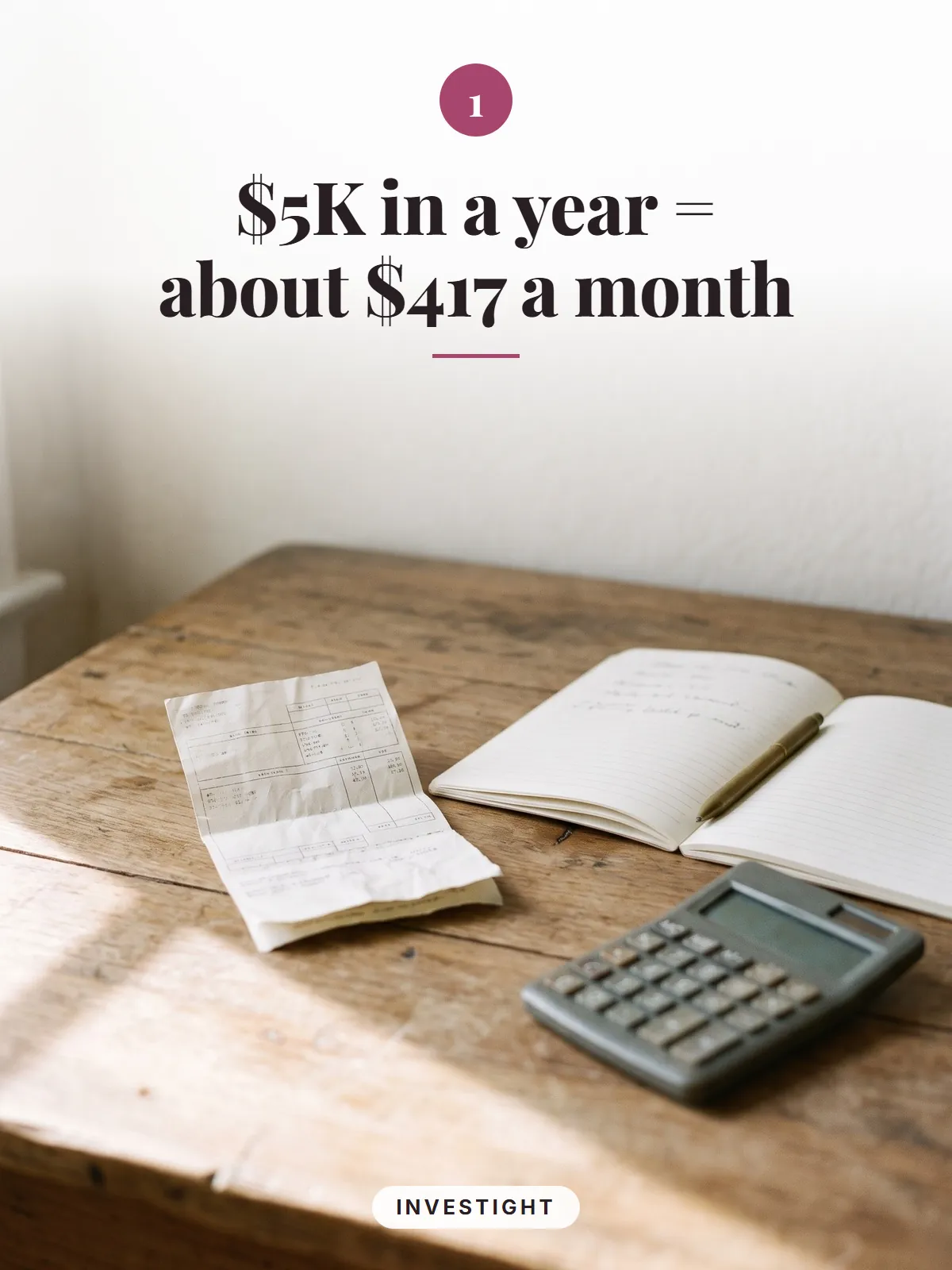
On $2,500 a month, the same goal is about 17% of pay. That is still possible, but it usually needs a side income or a longer time frame.
Step 2: Choose One Year, Six Months or Three Months
One year is the right pace for most people. It feels steady, leaves room for bad weeks and builds a habit that lasts.
Six months doubles the weekly amount to $192.31. It suits two-income households or anyone with a reliable side income.
Three months asks for $384.62 a week. It works only with a large surplus, a windfall or a short burst of extra work, and it is best for an urgent goal.
Step 3: Line It Up With Your Paychecks
If you are paid every two weeks, the biweekly plan is the most natural fit: $192.31 from each biweekly paycheck for 26 paychecks.
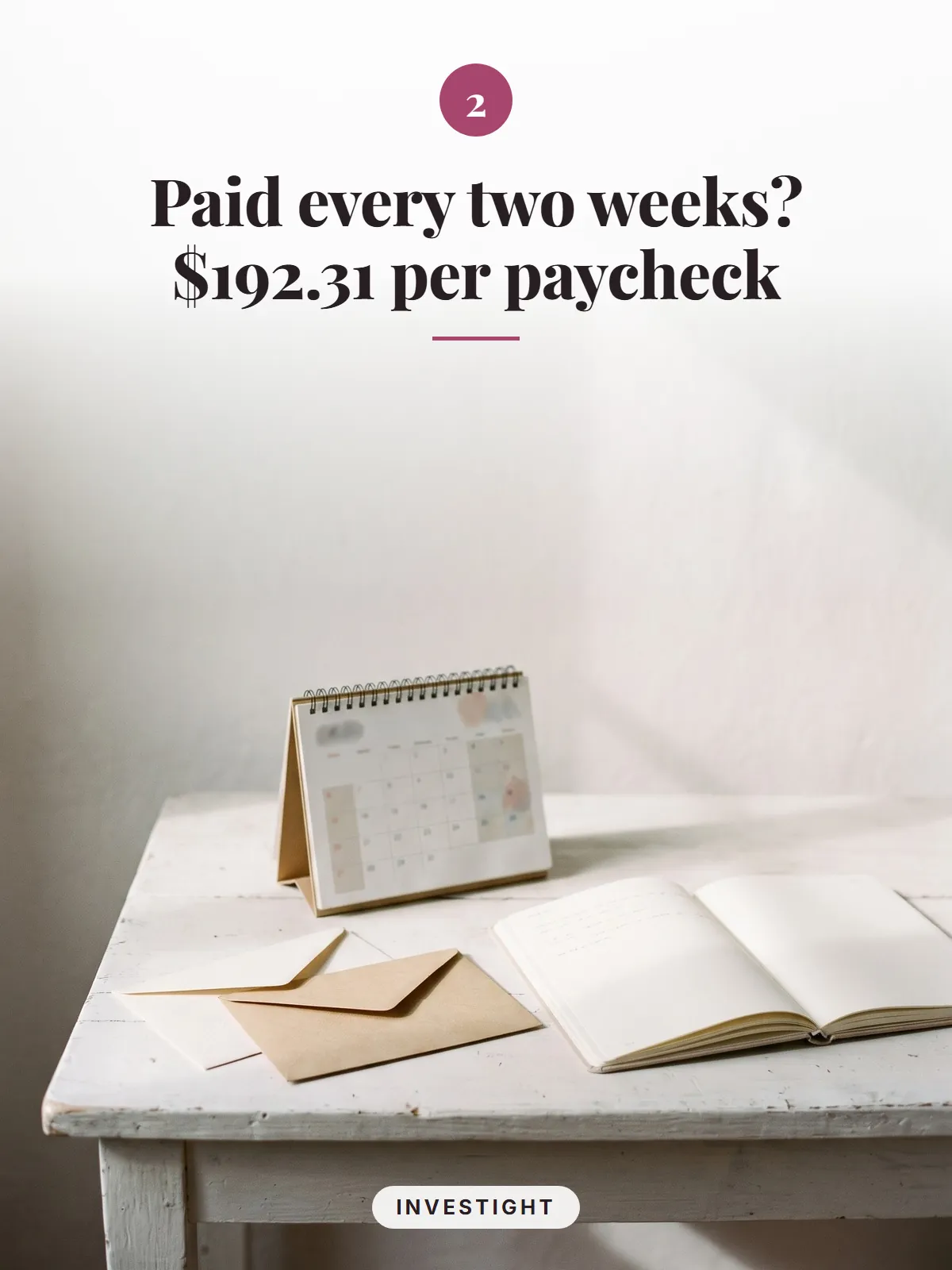
Two months a year bring a third paycheck. Send those two extra checks to the challenge and you can finish about two months early, or use them as a cushion for weeks you fall short.
Step 4: Open a Separate High-Yield Savings Account
Keep the $5,000 in its own high-yield savings account at an insured bank or credit union. It earns interest, stays out of your everyday spending and is slower to move, which protects it from impulse buys.
Name the account after the goal. "Emergency fund", "Car" or "5K" is much harder to spend on takeout than a generic savings account.
Step 5: Automate the Deposit
Set an automatic transfer for payday morning. Many employers also let you split your direct deposit, so part of each paycheck lands straight in savings without ever touching checking.

If your income varies, automate the smallest amount you are sure about and add the rest by hand on good weeks.
Step 6: Color Your Tracker
Print the tracker for your plan and color a box with every deposit. The 100-box version, with one $50 box per deposit, makes the whole $5,000 visible on one page.

Once a month, check that your account balance matches the colored boxes. A savings tracker only works if it reflects the real money.
For a bigger goal after this one, our 10k savings challenge uses the same steps at twice the pace.
Step 7: Use Windfalls to Get Ahead
A tax refund, a work bonus, birthday money or a rebate can fill several boxes at once. Send at least half of every windfall to the challenge.
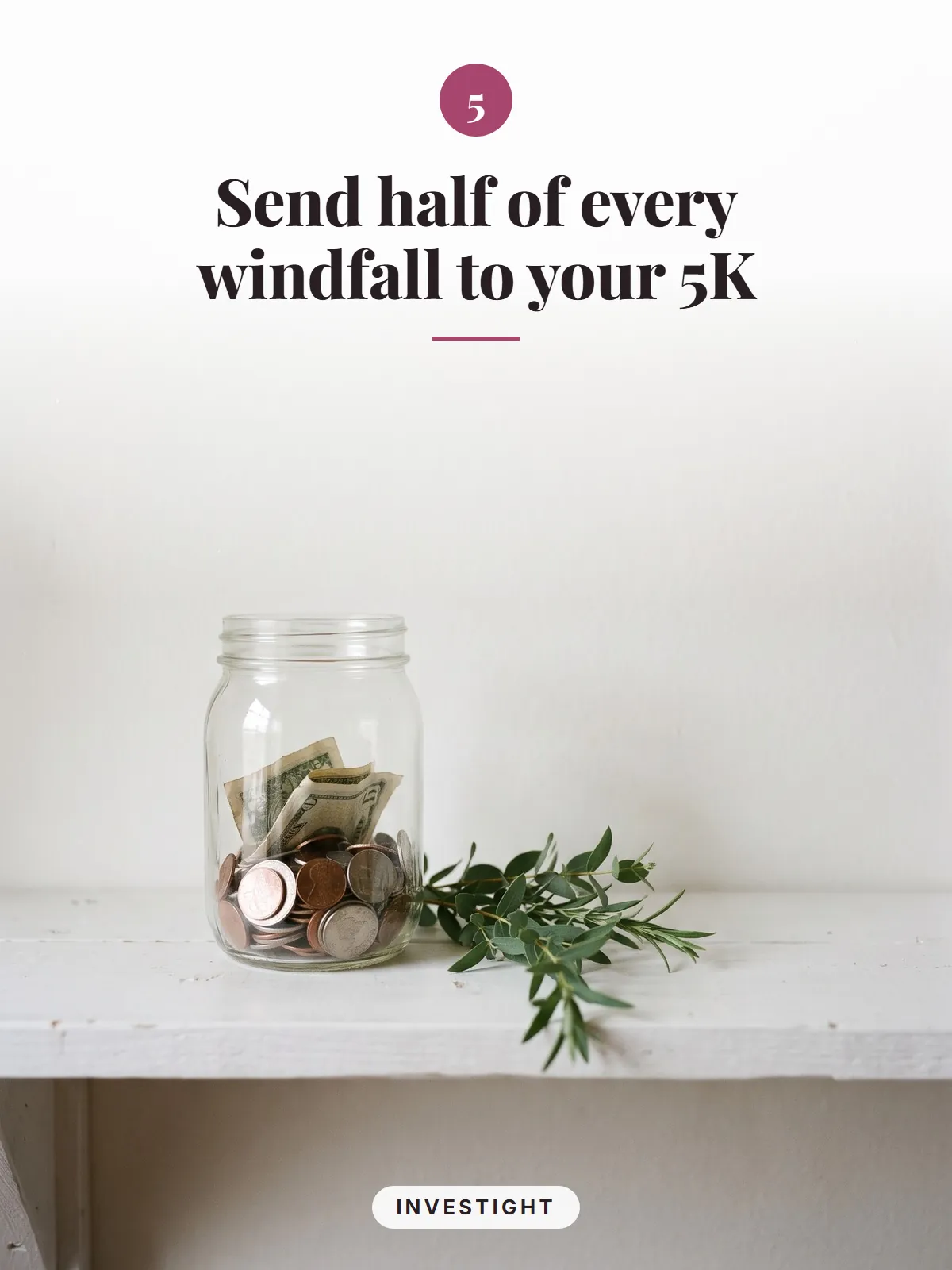
Getting ahead early gives you a buffer for the months when money is tight, like December or back-to-school season.
What Share of Your Pay a One-Year 5K Takes
This table shows the monthly amount, $416.67, as a share of different take-home incomes. It is the quickest way to see whether a one-year plan fits.
| Monthly Take-Home Pay | $416.67 a Month Is |
|---|---|
| $2,500 | About 17% |
| $3,000 | About 14% |
| $4,000 | About 10% |
| $5,000 | About 8% |
| $6,000 | About 7% |
Under 10%, the challenge usually fits with small changes. Between 10% and 15%, plan a few bigger cuts. Above 15%, add a side income or stretch the goal to 18 months, which needs about $277.78 a month.
Where to Find $417 a Month
Few people have $417 a month sitting unused. Most find it in several smaller places. Here is one realistic mix for a household with $4,000 of take-home pay.
| Source | Monthly Amount |
|---|---|
| Existing savings, redirected to the goal | $150 |
| Meal planning and fewer takeout orders | $120 |
| One or two canceled subscriptions | $30 |
| Lower phone or insurance rate | $40 |
| A few hours of side income | $77 |
| Total | $417 |
The biggest lines are usually food and existing savings. A weekly meal plan built around sales and pantry staples is one of the most reliable ways to save $100 or more a month without feeling deprived.
A small side hustle closes the rest. At $15 an hour, about five hours a month of extra work covers $77.
The 6-Month 5K Savings Challenge
Saving $5,000 in six months takes $192.31 a week or $833.33 a month. It is very doable for a two-income household: each partner saves about $96 a week, the same as a one-year plan on one income.
For a single income, six months usually means combining a bigger cut, like a cheaper car or a roommate, with a steady side income. If that is not realistic, the one-year plan is the better choice. The total is the same.
The 3-Month 5K Savings Challenge
Three months needs $384.62 a week, or about $1,666.67 a month. That pace usually comes from one of three places: a large bonus or tax refund, an extra job for a short period, or living on one income while saving the other.
If you need $5,000 fast for a specific reason, like a move or a car, write a short-term plan with every source listed: windfalls, extra shifts, things to sell and spending to pause. Then go back to a normal pace once the goal is reached.
The 100-Day Version
Popular on social media, the 100-day 5k savings challenge asks for $50 a day, or $350 a week. It is a sprint, not a lifestyle.
It can work if you have a large one-time surplus coming in, like a seasonal job or a big commission. For most households, it is easier to treat the 100-day plan as a spending freeze plus a side job for three months, with a clear end date.
What $5,000 Can Earn in a Savings Account
During a one-year challenge, your balance grows from $0 to $5,000, so the average balance is about $2,500. At an example rate of 3.5% APY, that earns roughly $85 to $90 in the first year.
Once the full $5,000 is saved, the same rate earns about $175 a year. It is a small bonus, but it adds up, and cash in a jar earns nothing. Savings rates change often, so check your bank's current rate.
What to Use Your $5,000 For
Choosing the purpose before you start makes the challenge much easier to finish. These are the most common goals for $5,000.
An emergency fund. For many single people, $5,000 covers two to three months of essential expenses. It is the foundation of every other financial goal.
A car fund. $5,000 can buy a reliable used car in cash or make a strong down payment that lowers your monthly payment.
High-interest debt. If you carry a credit card balance at 20% or more, sending the money there after a small emergency fund can save hundreds of dollars a year.
A move or a big life change. Deposits, movers and first-month costs often add up to several thousand dollars.
Doing the 5K Challenge as a Couple
Two people saving together can finish a 5k savings challenge in six months at $96.15 each per week. Use one shared savings account and one shared tracker so you both see the progress.
If your incomes differ, split by percentage. A partner earning 60% of household income covers 60% of each deposit. Review the tracker together once a month, and celebrate milestones as a team.
A Low-Income 5K Plan
On a tight budget, $5,000 is still possible with time. An 18-month plan needs $277.78 a month, about $64 a week. A two-year plan needs $208.33 a month, about $48 a week.
Start with the smallest amount you can protect every week, even $25, and raise it each time something changes: a raise, a paid-off bill or a lower rent. The habit matters more than the speed.
Build a small emergency fund first, even $500, so a flat tire does not wipe out months of progress. Then let the 5K grow alongside it. For smaller starter goals, browse our savings challenges.
Side Hustle Ideas to Speed Up Your 5K
A small side hustle can turn a one-year 5k savings challenge into a six-month one. The best options fit around your schedule and pay reliably.
Pet sitting and dog walking: steady demand in most neighborhoods, and regular clients make the income predictable. Babysitting and tutoring often pay well in the evenings and on weekends.
Seasonal work: retail, delivery and warehouse jobs hire extra help from October through December. A few weeks of holiday shifts can add hundreds of dollars at once.
Skills you already have: bookkeeping, writing, design, editing or translation can often be done in a few evening hours. Selling unused items is another quick boost, and it clears space at the same time.
Send every side hustle payment straight to your 5K account, and set aside part of it for taxes on self-employment income.
How to Stay Motivated All Year
Twelve months is a long time to focus on one number. Small milestones keep the 5k savings challenge feeling close.
Celebrate every $1,000 with something low cost, like a picnic or a movie night at home. Use a different marker color for each month on your tracker, so you can see your pace at a glance.
Write the reason for the money at the top of the page. "Three months of safety" or "no car loan" is much more motivating than a round number when you are tempted to skip a week.
What to Do if You Fall Behind
Almost every saver misses a week at some point. A surprise bill or a short paycheck does not have to end the challenge.
If you miss one deposit, add it to the next payday or spread it over the next month. If you miss several, push the finish date back instead of trying to catch up all at once.
You can also switch to the mixed-box tracker for a while. Color a $25 box on hard weeks and a $100 box on good ones. Every dollar you already saved still counts.
5K Savings Challenge Mistakes to Avoid
Picking a pace that is too fast. A 3-month plan abandoned in week 4 saves less than a one-year plan you finish.
Leaving the money in checking. It slowly disappears into everyday spending.
Not planning for December. Holiday costs can wipe out a month of savings. Start a small holiday sinking fund or plan a lighter December deposit.
Restarting after a missed week. Add the missed amount to the next good week or extend your end date. Do not start over.
Frequently Asked Questions
How much do I need to save each week to reach $5,000 in a year?
$96.15 a week, or $192.31 per biweekly paycheck, or $416.67 a month. That is about $13.70 a day.
How can I save $5,000 in 6 months?
Save $192.31 a week or $833.33 a month. It works best with two incomes, a side income or a large cut like a cheaper car, plus any windfalls sent straight to the goal.
Is $5,000 a good emergency fund?
For many single people, $5,000 covers two to three months of essential expenses, which is a strong start. Families usually need more over time.
Where should I keep my $5,000?
In a separate high-yield savings account at an insured bank or credit union. Name it after the goal so you are less tempted to spend it.
Can I do a 5k savings challenge on a low income?
Yes, with a longer time frame. An 18-month plan needs about $64 a week and a two-year plan about $48 a week. Start small and raise the amount as your budget allows.
What is the best tracker for a 5k savings challenge?
The 100-box tracker with $50 boxes is the easiest to read. The mixed-box tracker is better if your deposits change from week to week.
Should I save $5,000 or pay off debt first?
Many people build a small emergency fund first, then focus on high-interest debt like credit cards. If you have no high-interest debt, saving the full $5,000 is a great next step.
How long does it take to save $5,000?
At $96.15 a week it takes one year, at $192.31 a week six months and at $384.62 a week three months. On a tighter budget, $48 a week reaches $5,000 in about two years.
What if my income changes every month?
Automate the smallest amount you can count on, such as $50 a week, and add extra by hand in good months. The mixed-box tracker makes uneven deposits easy to record.
Can kids or teens do a smaller version?
Yes. A teen with a part-time job can save a fixed share of each paycheck toward a $500 or $1,000 goal, using the same tracker idea with smaller boxes.
Start Your 5K Savings Challenge on Your Next Payday
$5,000 sounds like a lot until you break it into $192.31 per paycheck or $96.15 a week. Then it becomes a routine.
Check the share of your take-home pay, open the account, automate the first deposit and color your first box. One year from now, your 5k savings challenge will have built a cushion that makes every surprise smaller.
Pin this guide to your money board
Save this saving money guide on Pinterest so the numbers and checklist are there when you need them.
Save on PinterestThis guide is general education, not individualized financial, tax, or investment advice. Figures reflect rules in effect on Nov 20, 2026. See our financial disclaimer.
